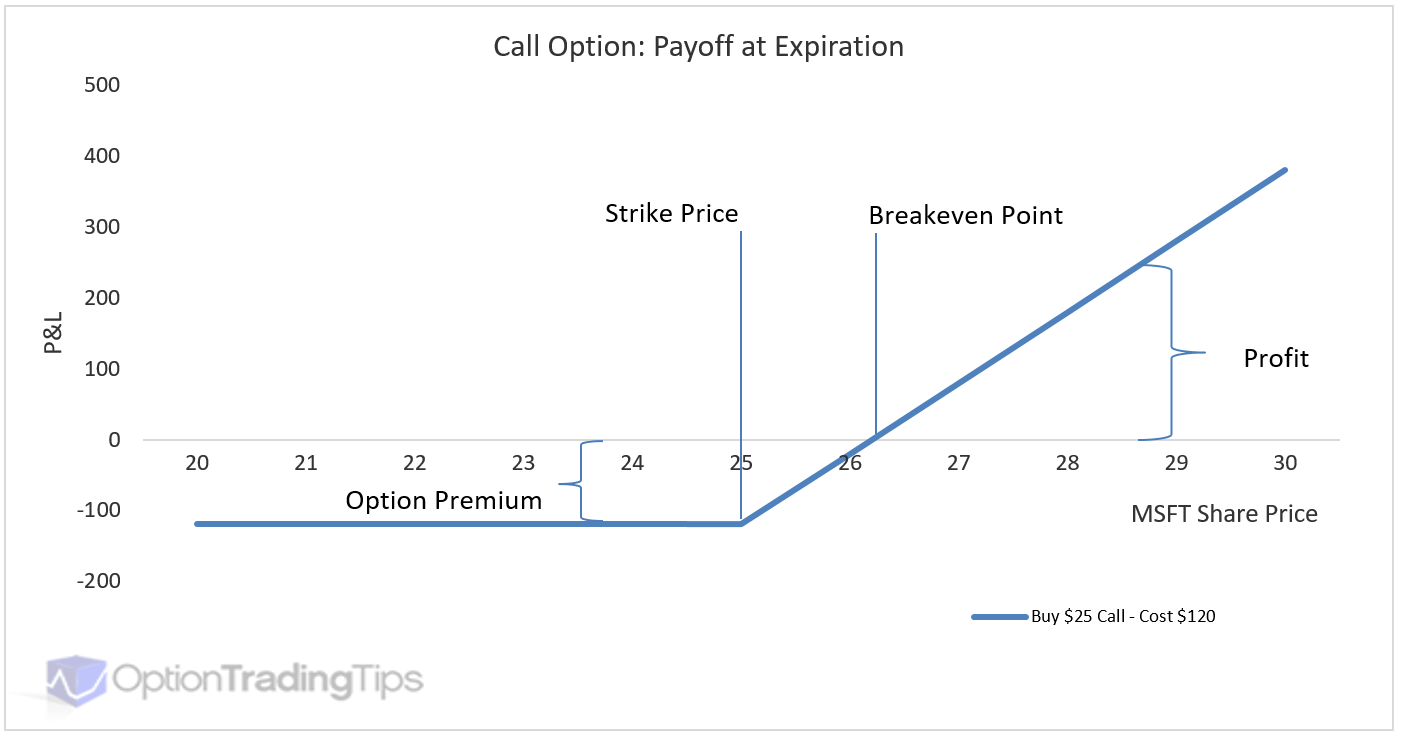
Option trading has many advantages over other investment vehicles. Trading in option contracts can give an investor the flexibility to place bets on very specific market outcomes.
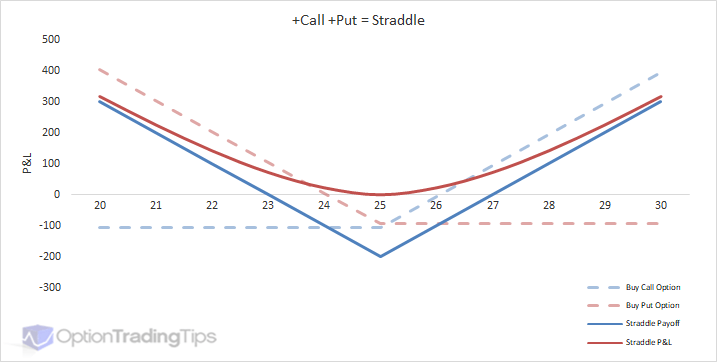
For example, an option trader can make a bet that in 6 months time a stock will be trading either above a certain price or below a lower price - an each way bet if you will. If the stock trades between these two prices in 6 months, the trader will lose a predetermined amount. This type of option strategy is known as a Long Straddle or could also be a Long Strangle.
Option contracts also provide traders with an enormous amount of leverage. In the US, 1 option contract represents 100 underlying shares. In other countries, such as Australia, option contracts can be in multiplies of 1,000 times the underlying stock or commodity. So, with a relatively small amount of money an option trader can control a very large underlying stock position.
Because of this, option trading can also be a very risky venture for the inexperienced. Of course, option trading can make you very large returns in small amount of time, but trading options can also lose you the same amount if you are not careful.
Options101 was written to introduce new comers to option trading terminology. As you go through the basics you will be exposed to key terms that will become clearer as you progress through this short course in option trading.
After you have become more familiar with the basics of option trading, why not take a look at some of the possibilities of Option Strategies. This section describes the main strategies used by investment professionals.
I have also developed an option pricing spreadsheet that you can download for free. It prices European options using the Black Scholes Model and can also calculate all of the option greeks. You can also use it to test risk/reward profiles for various option strategies to help you better understand option trading.
The tutorials section will go through actual examples of how to use options to make directional bets in stocks and futures. Even though the trades are hypothetical they are illustrated on a real time basis and updated frequently.
Comments (61)
Peter
January 23rd, 2012 at 3:54pm
Try Interactive Brokers.
tom
January 21st, 2012 at 10:30am
Hi,
Ive been learning to trade options and futures for over a year and im ready to begin.
However ive found that with my current broker im not allowed to trade futures at all and they only want to allowed covered options strategys. I want to trade independantly online and be allowed to sell naked puts and/or calls. any advice you could offer on how to achieve this would be appreciated.
thanks
Peter
January 2nd, 2012 at 5:38pm
Hi Patrick, no worries about the questions, I'm happy to help!
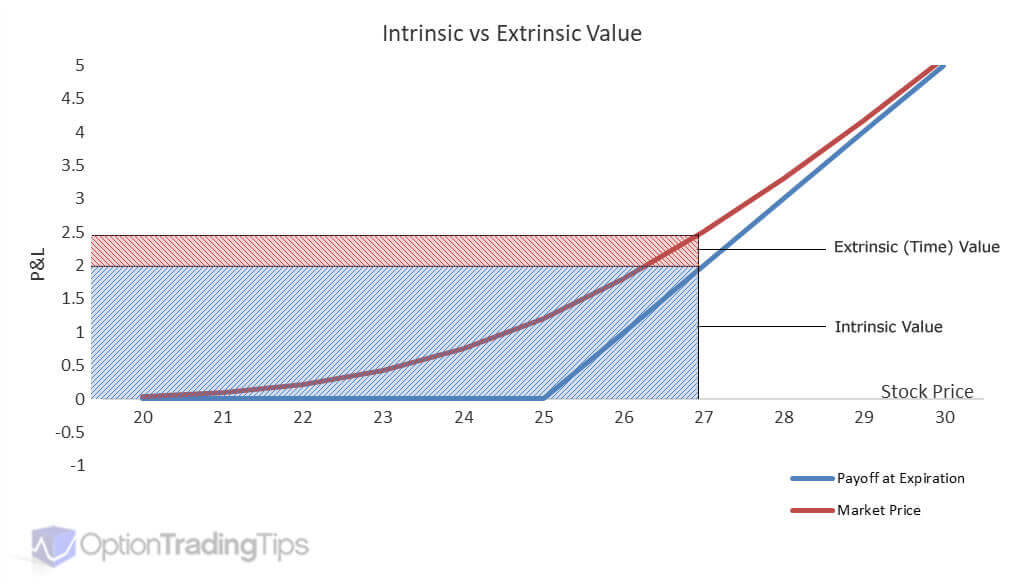
It's impossible to say exactly what the market price of the option at that time, however, you can be certain that the price of the option will be at least its' intrinsic value - i.e. for a call option this will be the stock price minus the exercise price. Check out the page on option value for a deeper explanation.
Patrick
January 1st, 2012 at 8:46pm
Hi Peter,
Thanks for all the great info - you're very patient and clear. Very helpful. I'm pretty sure I'm clear on the call options - which I'm hoping to purchase soon...but something you just mentioned confuses me; time decay. What is this? The reason I ask is this:
I plan to buy a fairly ridiculous number of call option contracts - pretty cheap. I wouldn't have the cash on hand to exercise the contract so, I'm clear on the fact that I can just unload (sell) back the contracts if, in fact, they are in the money, correct? I guess my question is, how do I know what sort of profit I'm getting? For example, for simplicity in numbers sake, let's say I'm buying Jan '14 call options at a strike price of $4 at a premium of $.10. Let's say I buy 100 contracts ($1000 for 10,000 shares). Let's say that in December of '13 the shares are at $5. I can sell the contracts back, yes? At what profit?
Thanks in advance - hope my questions isn't too moronic.
Patrick
Peter
December 27th, 2011 at 6:29pm
Hi Kanchan, a pricing model depends on the style of option (e.g. American/European) - not the country.
Index options (i.e. NIFTY) are European style and stock options are generally American style. For European options you can use a Black Scholes Modeland for American options you can use a Binomial Model.
kanchan
December 23rd, 2011 at 12:22am
do u have any excel pricing model for Indian options ?
Peter
December 20th, 2011 at 5:09pm
Hi Danielyee,
When to enter the market all depends on your view of the stock.
danielyee
December 19th, 2011 at 5:03am
Hi
I'm Daniel from Malaysia
I'm very new in option trading. Can some one please guide me where I can learn when time to enter the trading? Thanks.
Adil Siddiqui
October 27th, 2011 at 3:07pm
Great information on options, what kind of strategies can be used in this volatile climate especially on instruments like Gold
Peter
October 4th, 2011 at 12:21am
Yes, take a look at the article on the Binomial Model.
Bruce
October 3rd, 2011 at 11:34pm
Do you have any excel pricing model for American options?
Peter
September 11th, 2011 at 7:05pm
Possibly...options lose value as expiration approaches (time decay) and the amount lost increases the closer the option is to expiration.
Any potential gains due to movements in the underlying price need to be enough to outweigh the effects of time value and changes in implied volatility.
Having said that, however, if the price movement you mentioned occurred very quickly, say, over one day then you will most likely still make money on that option.
shail
September 11th, 2011 at 7:04am
Hi Peter,
I'm just getting to know options and had few question if you can help me understand.
Say I have bought a call option contract with strike 5000 at a premium of 15 and qty 100 on 03rd Sept, 2011 whereas the current index level is 4500.
Now if the index moves till 4900 do I still make money? Considering that the index has not cross the strike level of 5000 (buy level)?
Peter
August 11th, 2011 at 6:57pm
Buy to open = to establish a new long position
Buy to close = to exit/close out an existing short position
Sell to open = to establish a new short position
Sell to close = to exit/close out an existing long position
Exercise = if you are long an option and you want to exercise the option to take delivery of the underlying or sell the underlying (depending on whether it is a call or put option)
Yeah, I'm not sure why some brokers use that terminology in their platforms - it is confusing. I think a simple "buy" and "sell" is enough. I mean, if you own 100 shares in MSFT and you want to get rid of them I think it is clear enough that you would "sell" 100 MSFT.
Gabe
August 11th, 2011 at 3:13pm
So when I sell the contract it doesn't mean i'm writing it i'm just selling a already written contract correct? Also when I go to buy a contract/option thru my broker (tdameritrade) I chose what leg of the symbol [what contract I want] aka GE, etc....but I have to chose one of the four options
---------------
Buy to open
Buy to close
Sell to open
Sell to close
Exercise
----------------
Can you explain what each one means? What one would I chose to just buy, say I wanted a *call option* which is what confuses me. Whats the difference between Buy to open and Buy to close and all the rest....
Thanks,
Peter
July 31st, 2011 at 7:06pm
Kind of - but you don't "have" to buy the stock. You have the "option" to buy it. If the option contract is worth more in the market than what you paid for it, then you can simply sell it back and make the same profit then you would if you went and "exercised" the option and purchased and sold the stock.
Gabe
July 30th, 2011 at 5:17pm
Hi, I'm very new to options (have been trading stocks for some time, and i'm self taught about everything, i'm only 16) and i'm having some trouble understanding them....when I buy a options contract and everything goes smooth and it hits above the strike price in the allotted time I then have to pay the contract price for the stock (I then own the stock and can sell it [if I please] and the contract is now mute?)
If it doesn't hit above the strike price then I lose all my money that I paid for the *contract*, correct? I don't have to buy any stocks? Obviously we area talking about *call options* here.
Thanks,
Vignesh
July 29th, 2011 at 6:06am
Hey..I downloaded your Option trading worksheet. Good work. It is very useful. Thanks for your effort.
Peter
June 16th, 2011 at 5:16am
Thanks for the feedback Jean, much appreciated!
jean
June 15th, 2011 at 11:27pm
Hi Peter
I am interested to learn options trading but I am a total newbie in this area, and I really am lousy on charts and calculations..
So far I have touched on your introductory notes on 'What, Why and Who Trade Options", you have made it very easy to understand, thank you.
- Jean
Nitin
May 14th, 2011 at 12:14am
Thanxxx a Lot Peter For your Help ..Really u r doing a G8 Job....
Peter
May 10th, 2011 at 7:06pm
Hi Jason, I've never come across this firm before. They are Australian based so the information would be focused on ASX listed stocks I would imagine. I've never participated in any options course like this so I cannot comment directly - but would like to hear about your experience if you attend. Let me know.
Jason
May 10th, 2011 at 1:31am
Hi Peter,
have been looking at doing an options trading course that covers in details charting techniques. Have spoken to several training providers however one of them can be found at http://globaltradingedge.com what are your thoughts are their courses?
Have spoken to past students who have had some good success with writing covered calls. Their strategy involves Elliott Wave, Swing Trading and Fibonacci any thoughts would be greatly appreciated
thanks
Jason
Peter
April 7th, 2011 at 8:43pm
Hi Harry, your best bet would be to try option market making firms, however, you'd be hard to find them in India. Both NSE and BSE are order driven markets where there is no official recognition of a market maker. There are firms making markets on options in India, however, their details may be hard to find. I checked the NSE website just now and couldn't find any such firms.
You might want to contact the NSE directly and ask them. Alternatively, you could reach out to your local broker.
Good Luck!
Harry
April 6th, 2011 at 1:52pm
I am from India, I did my MBA in finance.In final semister I took Option Strategies as my Project.Now I want to work in this field so what to do now and which companies I should try,can any one help me in this matter?
Peter
March 2nd, 2011 at 3:02am
I've not bought the ebook ezy options sells so I cannot comment. A good video options course is the Option Income System
- an online video series.
Dave
March 2nd, 2011 at 2:00am
What is your opinion on www.ezyoptions.com? What are some good cheap options trading courses?
Peter
February 15th, 2011 at 10:48pm
You mean like a Long Condor or Short Condor?
jan
February 15th, 2011 at 2:10pm
thanks peter. one more question. is there such a strategy where you go long and short call and put at the same time? for example when you wait a big move in the price of gold so you buy and sell all four of them for the same trigger price and wait for the outcome?
Peter
February 14th, 2011 at 4:15pm
Hi Jan,
Here are some option recommendation services;
Option Sizzle
Index Option Trader
Call Writer
Peter
February 7th, 2011 at 6:19pm
Hi Sandy,
Your broker should provide a platform with options functionality. However, if you prefer standalone software for analysis you could try optionvue.com or Omni Trader.
Sandy
February 3rd, 2011 at 3:07am
Your site is very informative.Thanks. Could you kindly give some advice on cost effective software packages that can be used in stocks/options? I am new at this.
Peter
January 31st, 2011 at 10:30pm
Hi Gerry,
If you own the stock and sell a call and a put at the same strike (i.e. a short straddle) the payoff profile is the same as that of a covered call.
JPD
January 31st, 2011 at 12:03pm
Gerry:
You may want to go through whatever theoretical courses that you have taken a few more times.
Over time, you will lose your shirt. For example, MSFT was selling for around 28.5 the time of your post. Let's say you sold 29 Feb 2011 options. On 28 Jan MSFT hit 29.45 intraday -- your put options might be called away for a $45 loss per contract. Two days later when the price ratched down to 27.50 intraday -- your call options might be called away for a $150 loss per contract.
Gerry
December 17th, 2010 at 11:29am
Hi , I have some questions relating to options , which I dont seem to find answers to , maybe you could help. If I own stock , say MSFT , and sell a call option for strike price 29 , pocket the premium ( I understand this obliges me to sell the share at 29) . Then if I sell put option for strike price 29 , pocket the premium ( I understand this will oblige me to buy share at 29 ). Is this a viable strategy ? I cannot see a down side but I have only theoratical experience with options. Thanks all
damien
December 17th, 2010 at 9:03am
Thanks for you quick response, I gone on to the Savi website but they do not appear to provide tutelage in options. My main interest is in options. Thank you
Peter
December 16th, 2010 at 4:54pm
Hi Damien, if you're after practical training with a prop trading firm, then you could try getting in touch with Savi Trading - they are based in London.
If it's just some conversational type mentoring then you might want to try asking a few of the folks on Trading Coach Directory.
I'm not affiliated with either of the above so cannot comment on the quality of their material. Though if you try any of them let me know and I can pass on the feedback via the site. Good luck!
damien
December 16th, 2010 at 11:43am
Please admin, I know nothing about share trading, futures and options, but I hold a masters degree in real estate finance and I am most willing to learnin particular options trading so I can make myself a better life, Please can you kindly recommend a good tutelage program or course for me so I can educate myself and make this life I dream about a reality. I am willing to devote total time, energy and al m y resources to tjhis as I have been advised by my sister in Canada to learn about options trading to make my income from there.
I reside in the UK...London to be precise and am really keen to know where to begin and for this knowledge. I know some background knowledge about options, futures and shares but that is all there is to it. Please kindly recommend me good tutelage or good program to educate me to the standard I want, Please. Thank you. My email address is donmillsd@yahoo.co.uk should you have further material for me I can use to educate myself on options trading. Please bear in mind I am a novice but a quick learner, I will like some practical and theoretical program to enable get myself this new career.
Many thanks
Peter
November 29th, 2010 at 6:25pm
Can you please elaborate - is something not clear? I am open to suggestions on how to improve the content.
ARVIND TRIPATHI
November 29th, 2010 at 5:46am
You should provide the basic definition first.
Ankit
October 20th, 2010 at 7:33am
I don't understand the strategy so, i am not interested but, now I want to understand because of to earn money.
Peter
October 4th, 2010 at 7:31pm
Have you had any success with such newsletters? I would be interested if you have...let me know.
AR
October 4th, 2010 at 6:20pm
Your option strategies are not creating the doubling or tripling account values as some of your other news letter buddies claim in their sites.
AR
Peter
September 6th, 2010 at 11:18pm
Hi Kam, yes, you can do whatever you want to the spreadsheet. The VBA code is not protected, so just open up the VB Editor and change the code all you like.
Implementing a Volatility Skew is a bit trickier though...you would need to be able to query a source of option market prices, download them into the spreadsheet and then calculate the Implied Volatilites for each. (You can use the Implied Volatility functions in the workbook for that).
Then, you would have to implement your own fitting logic to define a curve around these points. Once you have that, you can use each discrete point as your volatility input for your option model.
Kam
September 6th, 2010 at 7:31pm
Hi, I just downloaded the excel spreadsheet. Excellent job! I have 2 questions: 1. Is it possible to modify the model from Black Scholes to Whaley (American Futures options)? 2. How can I give a skew to the volatility for OTM options and be able to manually shift it and modify the slope? -Thanks
Peter
August 19th, 2010 at 6:05pm
Hi Tony, most would say to start off trading stocks and "work" your way up just so you become familiar with the risks associated with trading. It's up to you though.
When I opened up my first brokerage account my first trades were in orange juice and lean hog futures. Then I traded stock options on US equities before I actually did any electronic trades in stocks.
Tony
August 19th, 2010 at 12:41am
Hi,
I want to get into stock trading, can I start by going into option trading right away? or just start with the basic stock trading?
Peter
March 18th, 2010 at 6:41pm
From their website it seems as though MetaTrader only supports Futures, FOREX and CFDs.
milind
March 18th, 2010 at 4:27am
i am trading currencies on metatrader.is it possible to trade options simultaneously on metatrader
venika sharma
March 12th, 2010 at 11:49pm
Very good information.
md
December 30th, 2009 at 11:01am
Good day -we trade in indian stock mkt,if your strategies suits Indian mkt then we too want to learn more on option trading,please Guide me,Ty
sudheesh
August 25th, 2009 at 4:50am
u can add DEMOs in the Tutorials .
hedgex
August 8th, 2009 at 7:26pm
I'd like to say thanks for the contents here in general and the spreadsheet in particular -- it is the most wonderful learning tool one can find. Especially the Tips tab. When I check Natenberg's book (Option Volatility), Page 454, that has the strategy table, I was so confused -- I couldn't believe the book got the market direction reversed. Thanks for getting it right.
Shawna
May 17th, 2009 at 11:44am
Great information, thank you.
Jeremy
April 10th, 2009 at 11:10pm
I love the spreadsheet. Im still needing a U.S. currency formula (or spreadsheet) Thank you for this free advice, and i look forward to studying your sheets more.
Admin
March 22nd, 2009 at 6:40am
Not yet Greg. I will add a Binomial option pricing model soon.
Greg
March 20th, 2009 at 10:25am
Do you have a spreadsheet that price American-style options?
Admin
February 23rd, 2009 at 3:53am
Hi Jim,
Unfortunately I've no experience with their program/offering. If you do try it out, let me know your findings.
jim
February 22nd, 2009 at 12:43pm
what is your opinion of cashflow heaven subscri`ption service, looks very good and seems to have several years track record, have you heard anything on it?
Admin
September 30th, 2008 at 8:09pm
Hi Marie,
Hard to say. Possible sure, but difficult to say without knowing more about their strategy. Could you elaborate a little more on how they expect to achieve this? Or provide the web address of the said company?
Marie
September 29th, 2008 at 11:36am
One company offers to double your money in three months investment in otions trading, they say that their risk is very mininal. Is this possible, or could they be legitimate?
Add a Comment