5 Ways Options Help You Trade More Effectively
7 days of option lessons delivered to your inbox
Show me more →Guaranteed Maximum Loss Strategies
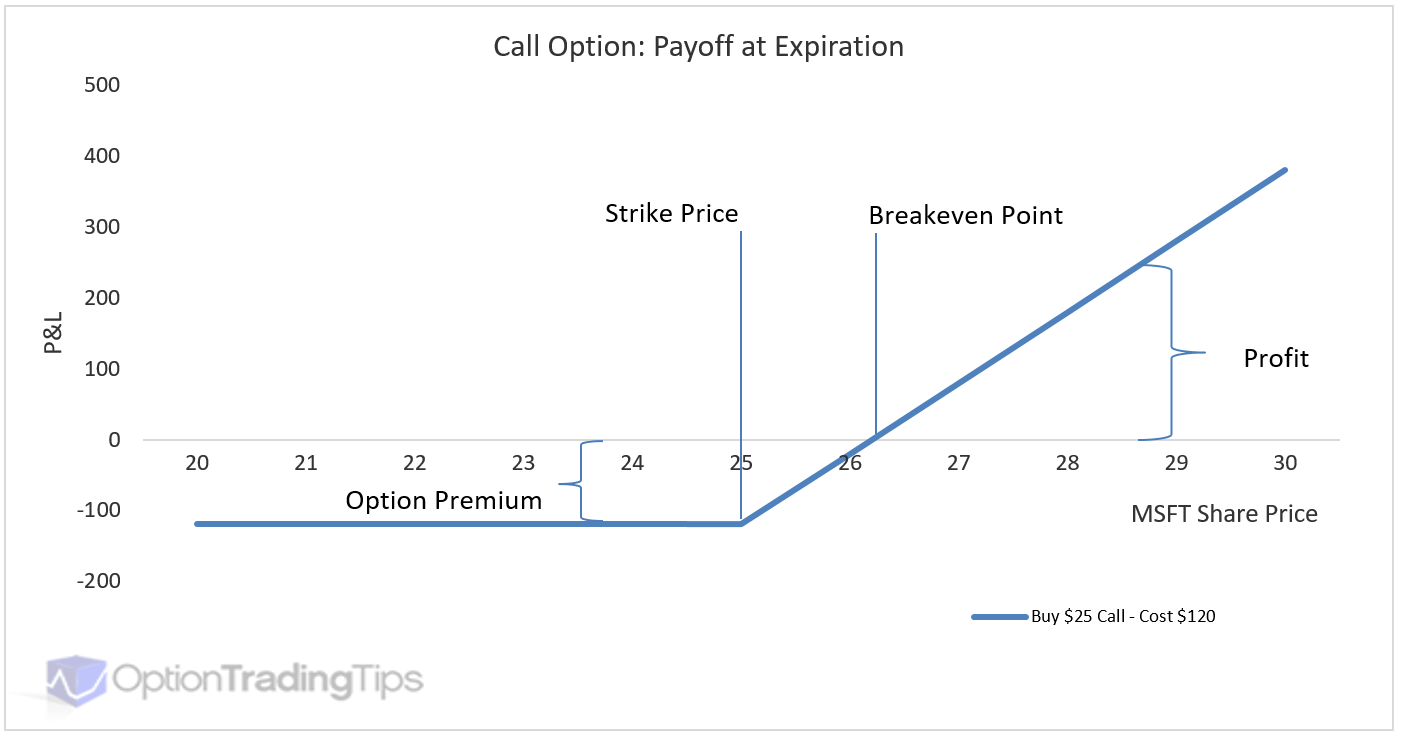
Unlike stocks, when you buy an option contract all you can lose is the upfront premium you paid for the position. It doesn't matter how far the market falls, your losses are guaranteed to be no more than your initial investment.
AND, if you're the buyer of an option you have limitless gains as the market moves in your direction, just like buying stocks.
Each Way Directional Strategies
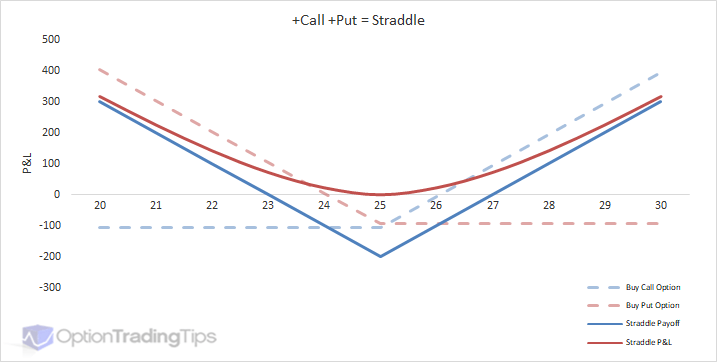
Not sure which way a stock is heading — just that it will make a large move up or down? Here is where you use options.
Combining a call and a put together means you profit from a movement in either direction.
Example strategies: Long Straddle and Long Strangle.
Profit When a Stock Goes Sideways
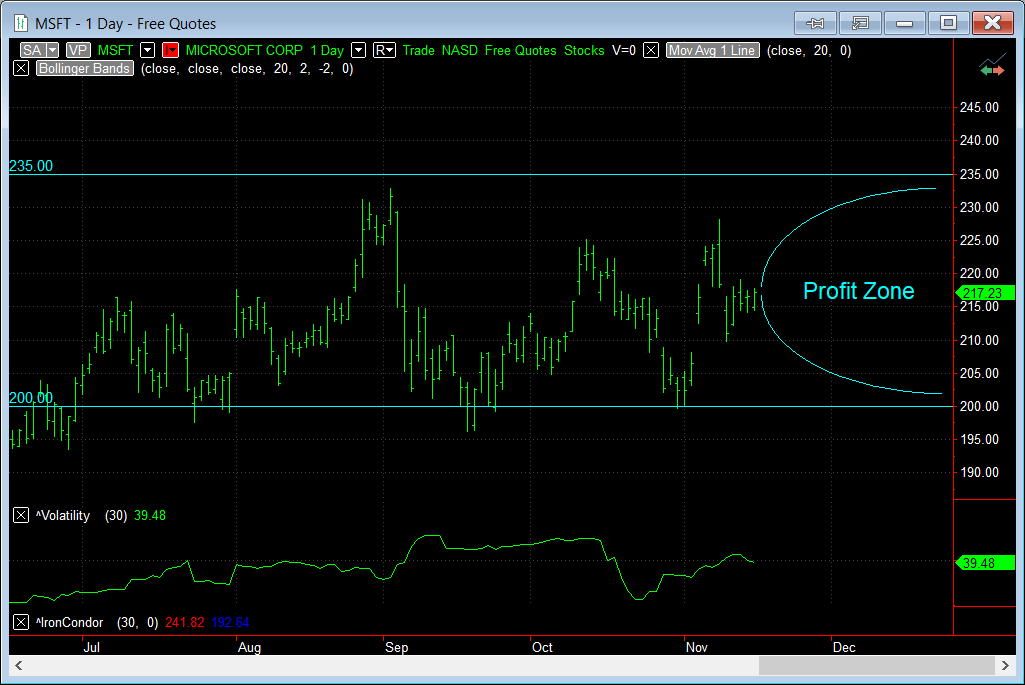
Imagine being able to make money if the stock does nothing!
This is a favourite strategy of those looking for regular monthly income — and the feature strategy used in the members area videos.
As long as the stock stays inside the strike levels, you're making money. Plus, you can set these up so that your losses are limited too.
Example strategies: Iron Condor and Double Calendar.
Get Paid for Limit Orders
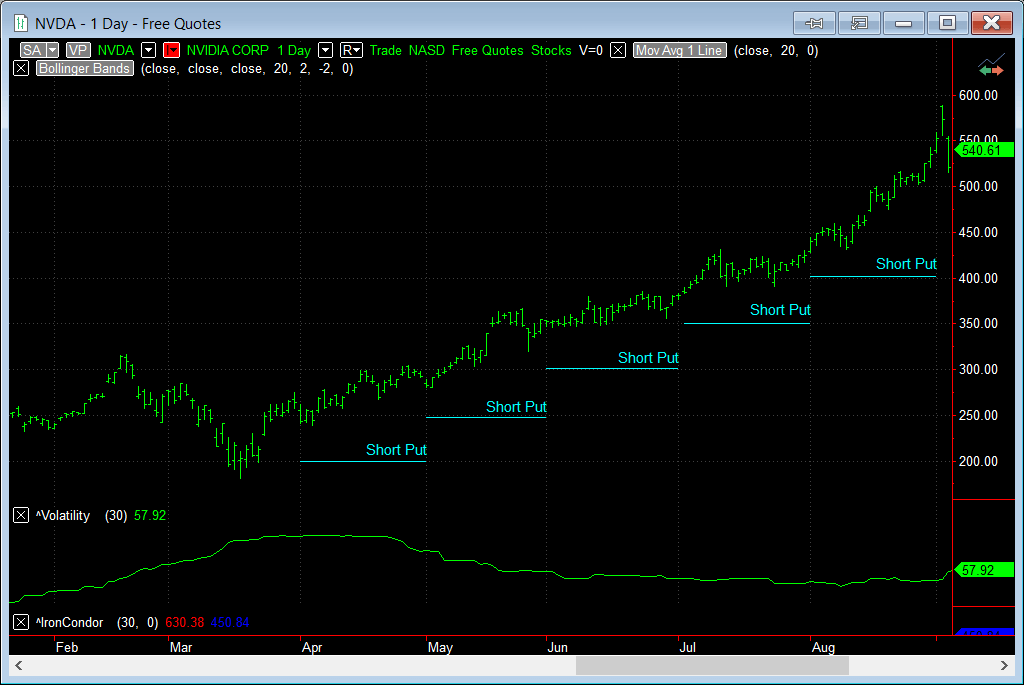
Stock price just a little high, yet you're still interested in buying? You can use options to get paid to place a limit order below the market.
A short put option does this. If the stock stays above your strike price your profit is the premium received. If it drops below, you buy the stock anyway.
You can keep repeating this over and over — keeping the premium each time and applying unused capital to other trades.
Watch and learn how to trade options profitably in our members area
Learn more →Popular Options 101 Articles
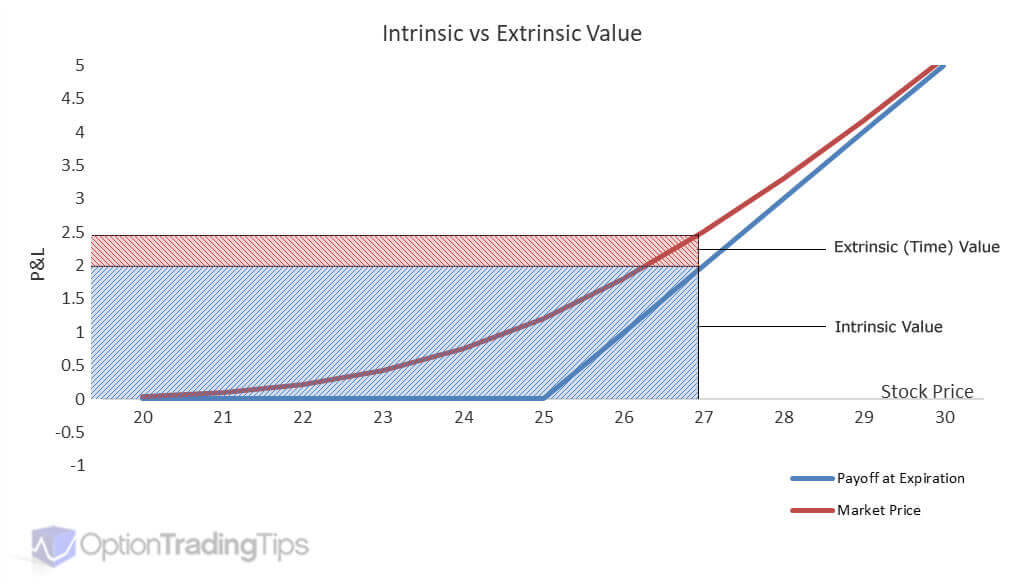
Option Premium
Understand the two components that make up an option price — intrinsic value and extrinsic value.
Read more →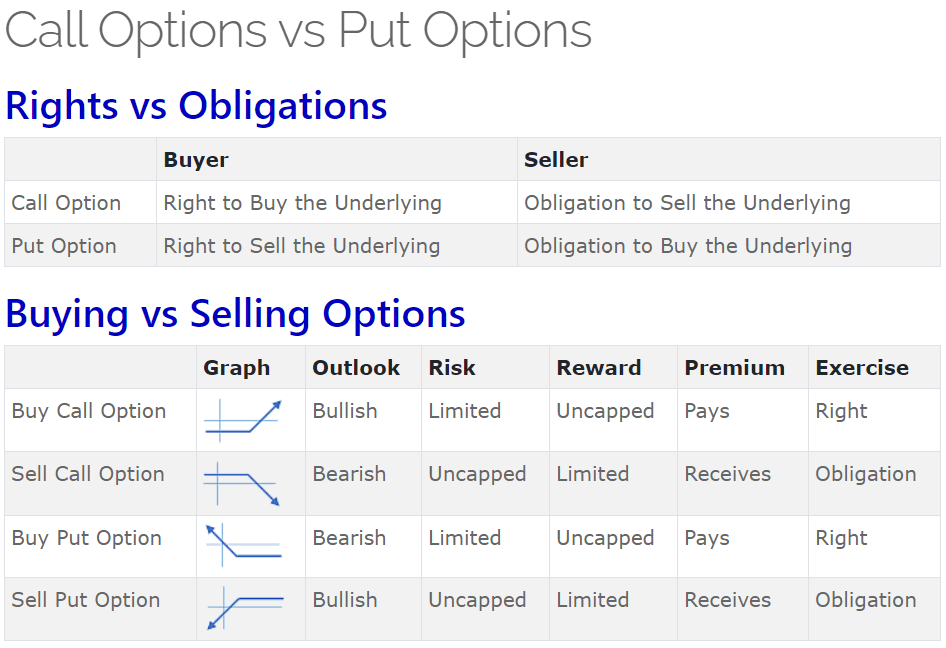
Calls vs Puts
Buy calls and profit when prices rise. Buy puts and profit when they fall. But what happens when you sell instead?
Read more →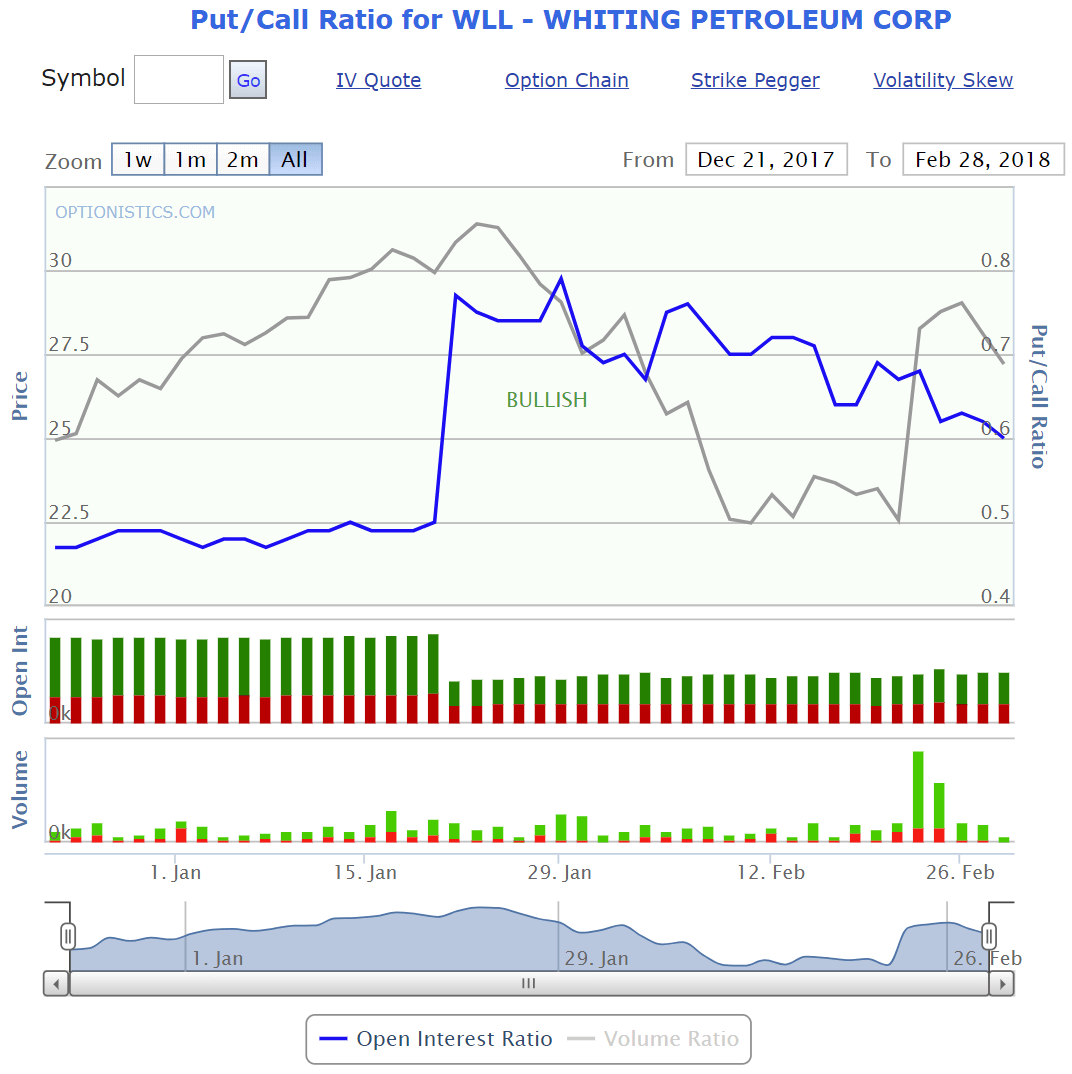
Put Call Ratio
Discover how option volumes can help you forecast the direction of the underlying stock.
Read more →
106 Comments
Wayne March 29th, 2012 at 7:01pm
Hi Peter, Thx for the last answer, When you sell back a call early, is it an automatic sale, like mutaul funds or when a buyer buys it?
Peter March 28th, 2012 at 6:12pm
Hi Wayne,
Your net profit in both cases should be the same. The difference is that in the second example, you will need more capital to take delivery of the stock once it has been exercised.
At the expiration date, the option will be worth the intrinsic value, which will be the stock price minus the strike price. So if you exercise the option, you essentially sell the option at zero to close it and then take delivery of the stock at the strike price. Then you sell the stock back in the market to make the profit.
wayne March 28th, 2012 at 1:03am
great site, thx, my question is that I want to purchase 5 call contracts @ $1.20 for May 25 @ $3.00. Let say that in the first week of May, the price is $8.00 and I wish to sell these contracts. What would my net be approximately? or then if I were to outright buy the stock on May 25, still at $8.00 and sell the same day, what would my net be then. I'm trying to validate my thought process.
thanks again.
Peter February 26th, 2012 at 4:20pm
Hi Raghavendra, the historical volatility spreadsheet downloads the data from Yahoo only. Currently Yahoo isn't supporting historical for NIFTY futures, however, you can download the index historical data by entering in ^NSEI into the ticker field.
Raghavendra February 25th, 2012 at 6:09am
In the historical-Volatility calculator, how can I import Nifty Futures. The Excel gives spot prices. But I want it for Nifty futures, which I want to import from NSE site, from the link link
Please let me, how to do it.
Peter January 23rd, 2012 at 3:54pm
Try Interactive Brokers.
tom January 21st, 2012 at 10:30am
Hi,
Ive been learning to trade options and futures for over a year and im ready to begin.
However ive found that with my current broker im not allowed to trade futures at all and they only want to allowed covered options strategys. I want to trade independantly online and be allowed to sell naked puts and/or calls. any advice you could offer on how to achieve this would be appreciated.
thanks
Peter January 2nd, 2012 at 5:38pm
Hi Patrick, no worries about the questions, I'm happy to help!
It's impossible to say exactly what the market price of the option at that time, however, you can be certain that the price of the option will be at least its' intrinsic value - i.e. for a call option this will be the stock price minus the exercise price. Check out the page on option value for a deeper explanation.
Patrick January 1st, 2012 at 8:46pm
Hi Peter,
Thanks for all the great info - you're very patient and clear. Very helpful. I'm pretty sure I'm clear on the call options - which I'm hoping to purchase soon...but something you just mentioned confuses me; time decay. What is this? The reason I ask is this:
I plan to buy a fairly ridiculous number of call option contracts - pretty cheap. I wouldn't have the cash on hand to exercise the contract so, I'm clear on the fact that I can just unload (sell) back the contracts if, in fact, they are in the money, correct? I guess my question is, how do I know what sort of profit I'm getting? For example, for simplicity in numbers sake, let's say I'm buying Jan '14 call options at a strike price of $4 at a premium of $.10. Let's say I buy 100 contracts ($1000 for 10,000 shares). Let's say that in December of '13 the shares are at $5. I can sell the contracts back, yes? At what profit?
Thanks in advance - hope my questions isn't too moronic.
Patrick
Peter December 27th, 2011 at 6:29pm
Hi Kanchan, a pricing model depends on the style of option (e.g. American/European) - not the country.
Index options (i.e. NIFTY) are European style and stock options are generally American style. For European options you can use a Black Scholes Modeland for American options you can use a Binomial Model.
Add a Comment