5 Ways Options Help You Trade More Effectively
7 days of option lessons delivered to your inbox
Show me more →Guaranteed Maximum Loss Strategies
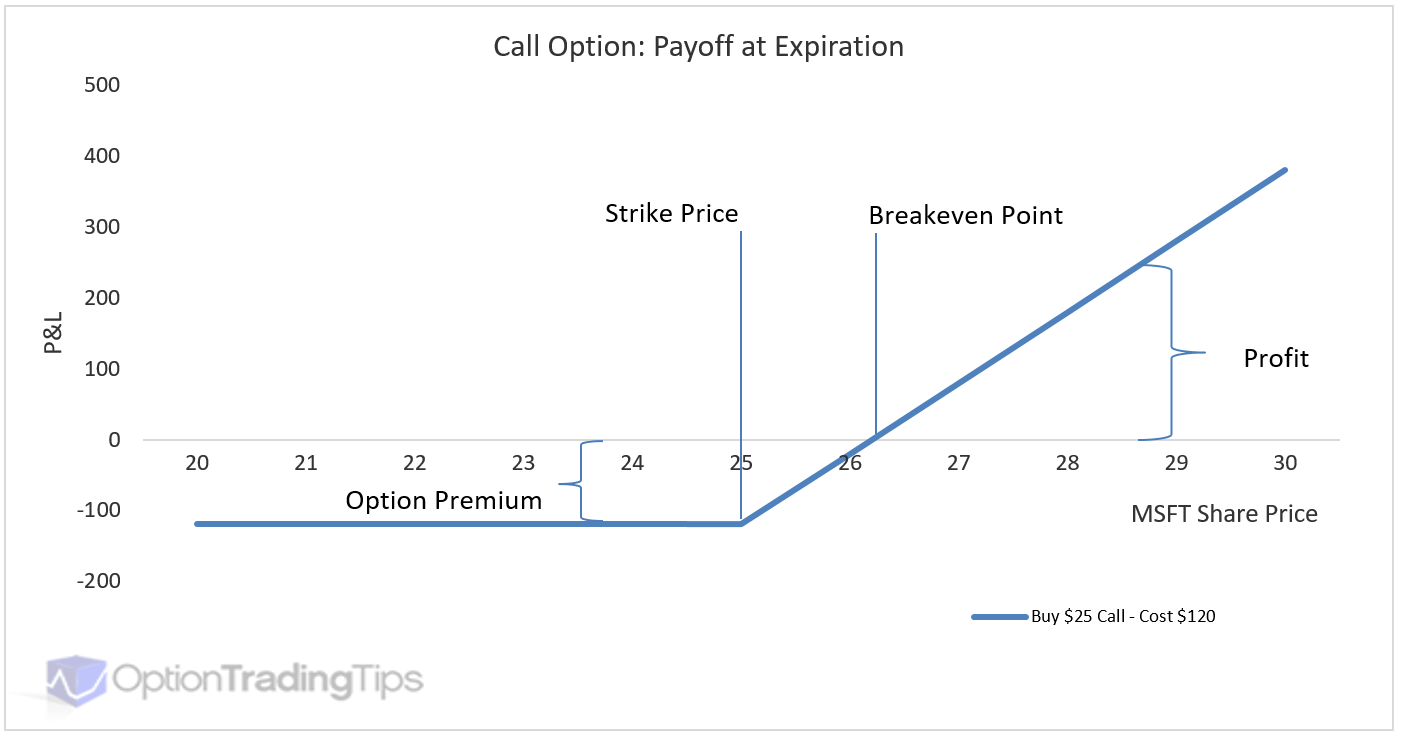
Unlike stocks, when you buy an option contract all you can lose is the upfront premium you paid for the position. It doesn't matter how far the market falls, your losses are guaranteed to be no more than your initial investment.
AND, if you're the buyer of an option you have limitless gains as the market moves in your direction, just like buying stocks.
Each Way Directional Strategies
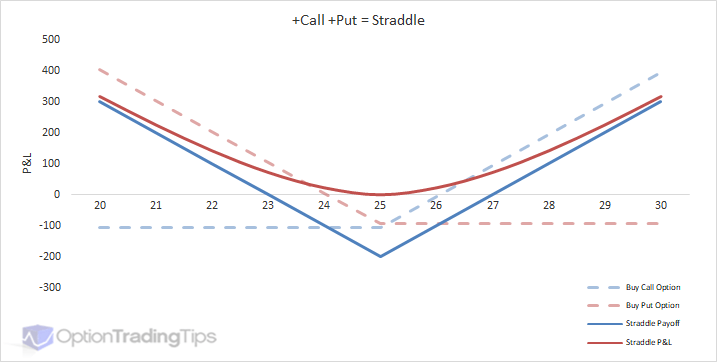
Not sure which way a stock is heading — just that it will make a large move up or down? Here is where you use options.
Combining a call and a put together means you profit from a movement in either direction.
Example strategies: Long Straddle and Long Strangle.
Profit When a Stock Goes Sideways
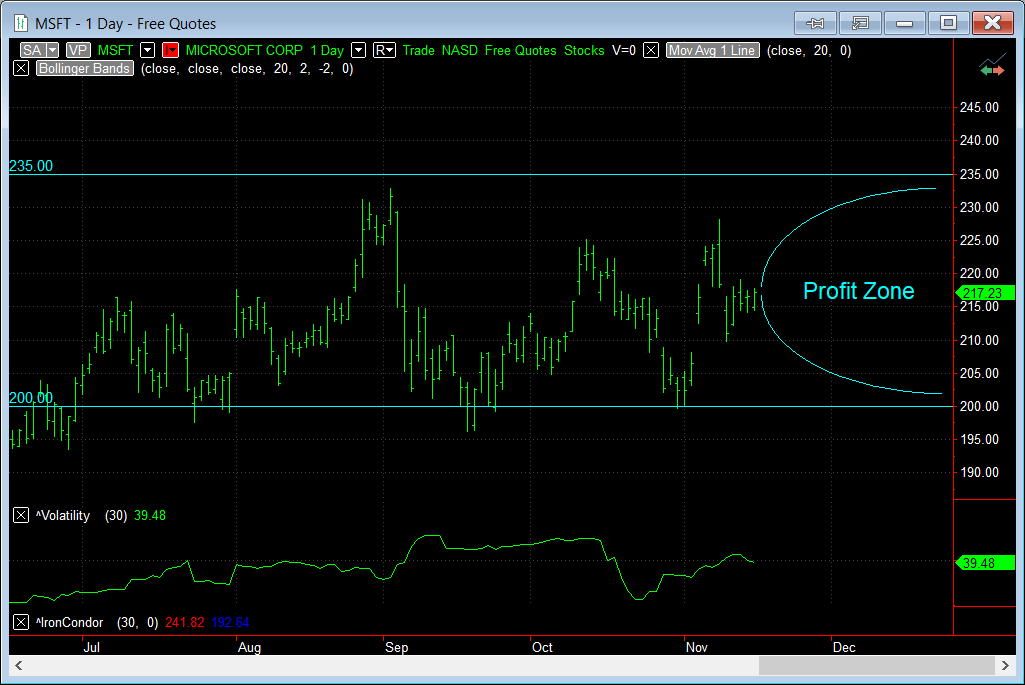
Imagine being able to make money if the stock does nothing!
This is a favourite strategy of those looking for regular monthly income — and the feature strategy used in the members area videos.
As long as the stock stays inside the strike levels, you're making money. Plus, you can set these up so that your losses are limited too.
Example strategies: Iron Condor and Double Calendar.
Get Paid for Limit Orders
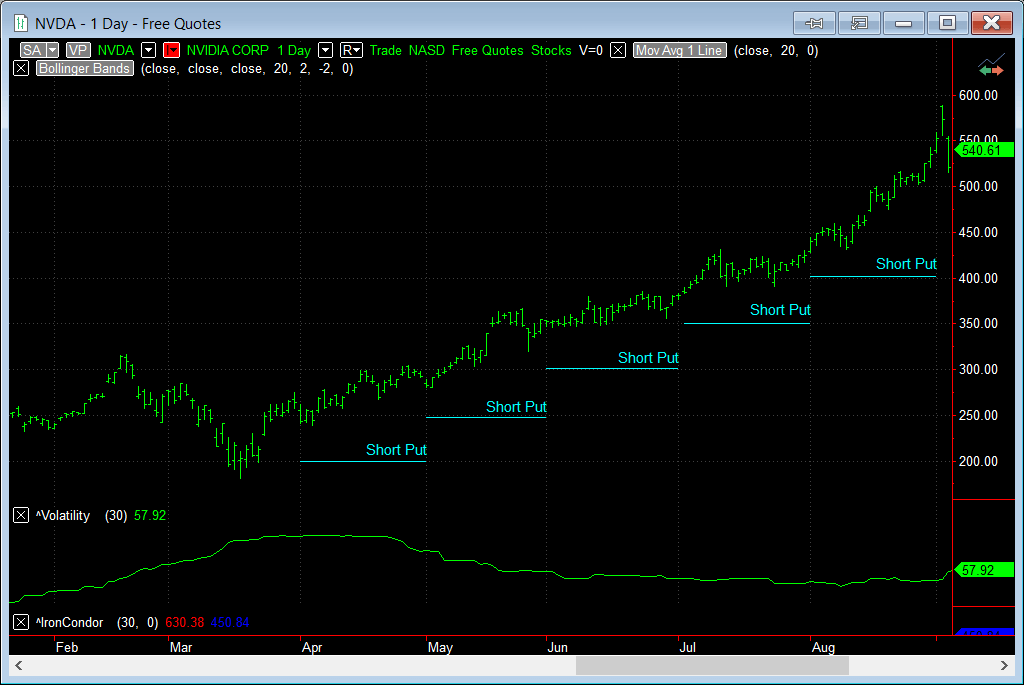
Stock price just a little high, yet you're still interested in buying? You can use options to get paid to place a limit order below the market.
A short put option does this. If the stock stays above your strike price your profit is the premium received. If it drops below, you buy the stock anyway.
You can keep repeating this over and over — keeping the premium each time and applying unused capital to other trades.
Watch and learn how to trade options profitably in our members area
Learn more →Popular Options 101 Articles
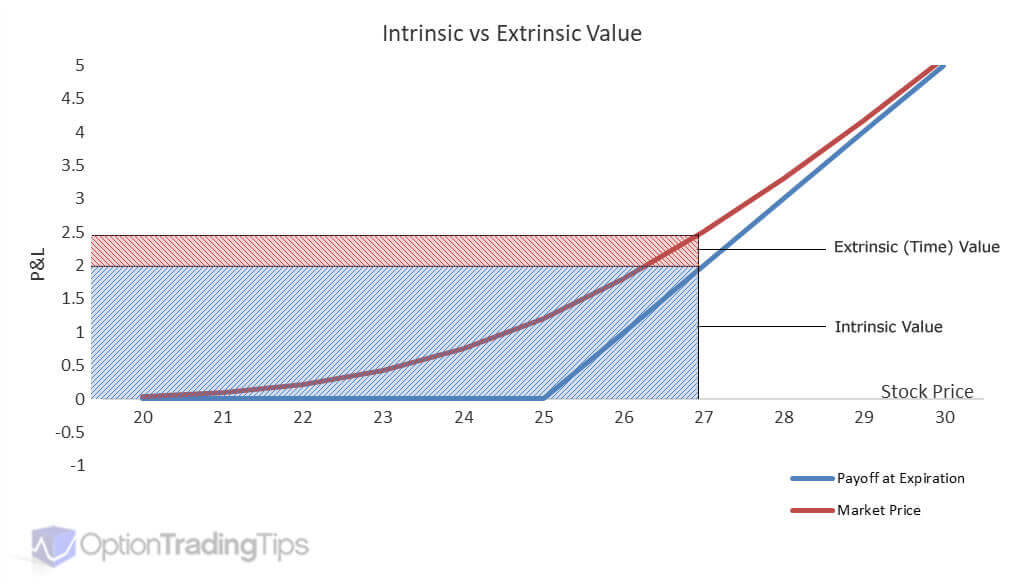
Option Premium
Understand the two components that make up an option price — intrinsic value and extrinsic value.
Read more →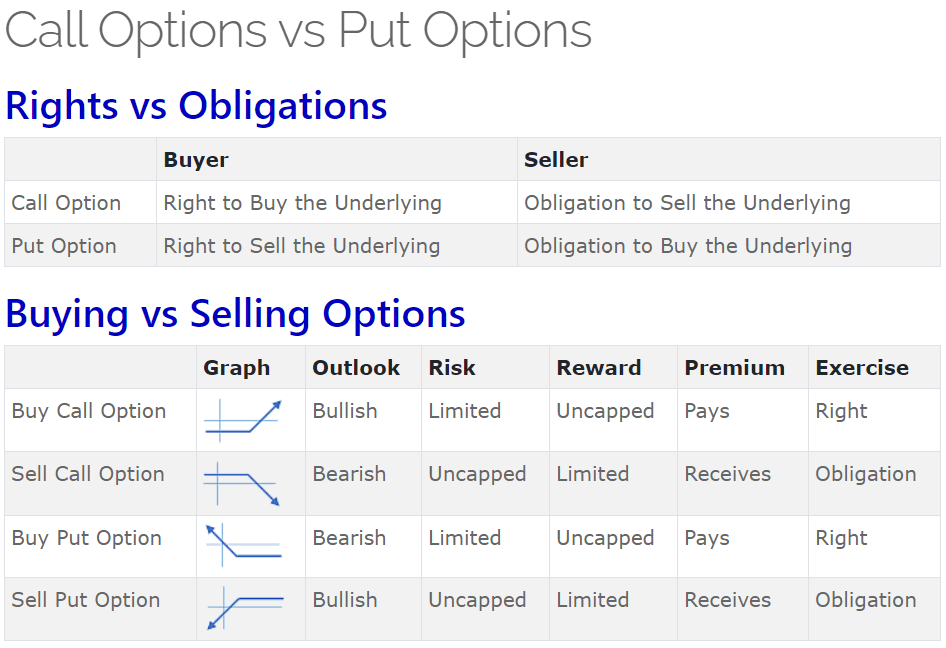
Calls vs Puts
Buy calls and profit when prices rise. Buy puts and profit when they fall. But what happens when you sell instead?
Read more →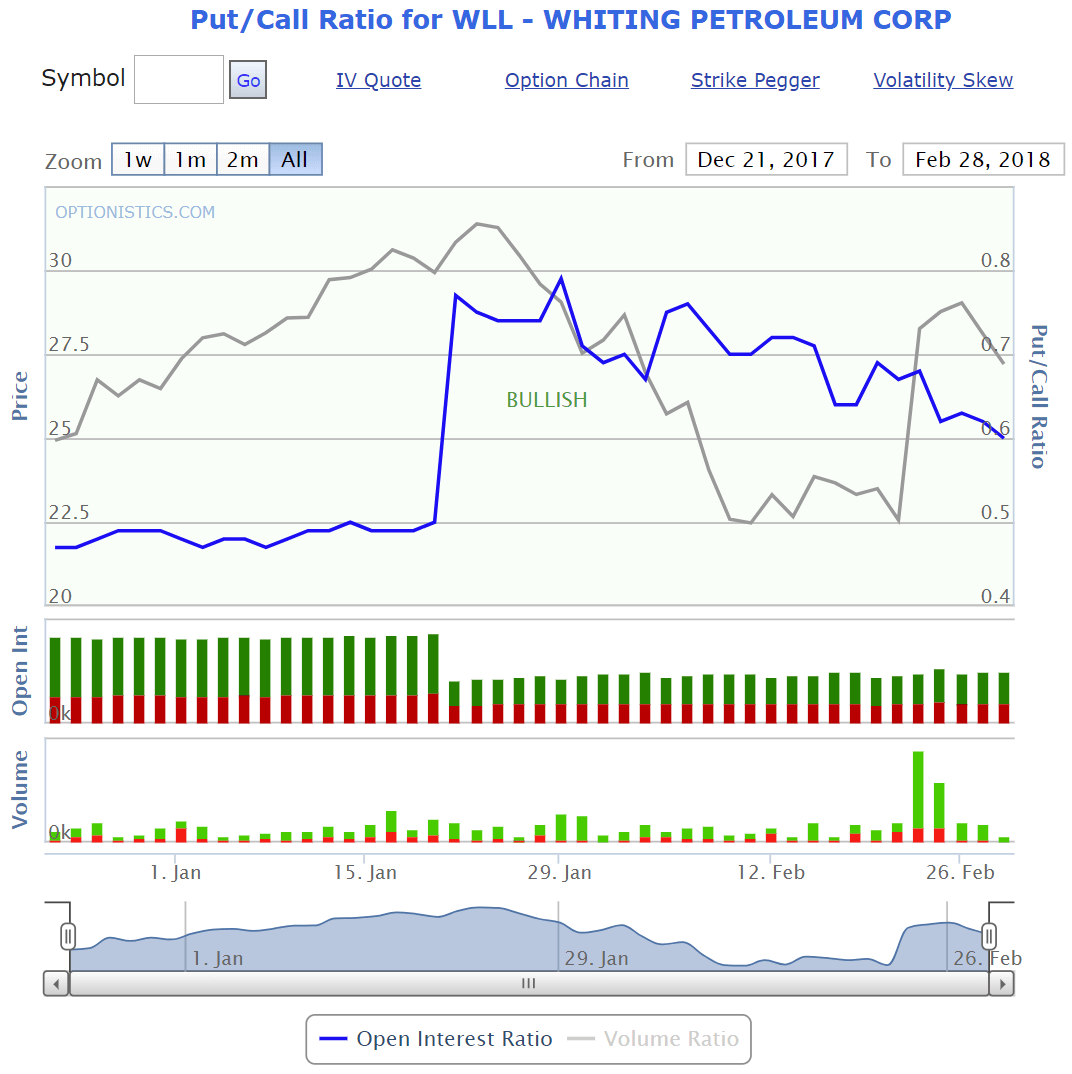
Put Call Ratio
Discover how option volumes can help you forecast the direction of the underlying stock.
Read more →
106 Comments
Peter April 3rd, 2013 at 5:02am
Hi Steve,
Regarding replication - do you mean synthetic relationships? You can mix up calls, puts and stock to make different kinds of payoffs based on the Put Call Parity relationship (C - P = S - X).
So a short call position can be replicated using a short stock and short put.
And a short put can be replicated with a covered call.
Peter April 3rd, 2013 at 5:02am
Hi Karen,
I'm really not sure how this relates to the Black Scholes option model, sorry! Can you share a little more about your calculations i.e what inputs you used to the BS model to generate the 90.45 put price? Just so I can try and understand more about the question.
Btw - what is this course you are doing? Sounds tough for a beginner class ;-)
Steve April 2nd, 2013 at 11:55pm
Hi Peter,
You are super.. most people in my class got it on the sudden drop in implied volatility but not on the decrease in interest rates.
Btw, i also got confuse on the option replication. Am i right to say to replicate a short call, you lend out money and short call shares of stock? For replicating a short put, you actually borrow money and buy put shares of stock? However, for replicating a long call, you lend out money and buy call shares of stock while for replicating a long put, you borrow money and short put shares of stock.
Is my concept and understanding correct?
Karen April 2nd, 2013 at 11:45pm
Hi everyone, I'm taking an option trading beginner class and got this question related to deposit insurance in today's lecture.
Suppose Bank A has a total asset value equal to $10 billion and deposits equal to %9 billion. Bank A has no other forms of debt. Bank A's assets have an annual standard deviation of 10%. The current interest rate (continuously compounded ) for one-year maturity is 2%. The deposit insurance coverage is for 1 year and the fixed premium rate is at 50 basis points per dollar insured deposit. The question is how much is the total dollar value of this subsidy by using the BS formula. And why the level of the interest rate does not have any effect on the answer?
I have attempted to solve it and the calculation on put option price is 90.45. And if i change the interest rate, then the put option price also change subsequently.. not sure why???
Peter April 1st, 2013 at 8:20pm
Hi Steve,
The most likely candidate is a drop in implied volatility - a decrease in interest rates will also cause a drop in the price of an option although the effect is minimal compared to IV.
Peter April 1st, 2013 at 8:18pm
Hi Joe,
I would say that the answer is A - assuming that the option in question for the stock and the future is the same i.e. it is a call in both examples or a put.
As there are no dividends paying on the stock the one year forward price for the stock will equal the one year future price.
Steve March 29th, 2013 at 10:52pm
Hi all,
I just wonder what would cost the price of a stock decreases significantly while the price of tis put option also decrease. Is this due to sudden decrease in the hedge ratio? or sudden decrease in investor's perceived future volatility? or the risk-free rate must have decreased significantly?
Joe March 29th, 2013 at 9:55pm
Anyone know how to deal with this question?
The 1 year risk-free rate 5% per annum (compounded continuously). ABC is a non-dividend paying stock and is currently selling at $100. A one-year futures contract on ABC is selling at Sxexp(rT) = 100xexp(0.05) = $105.13. A 1 year European call on the stock with the exercise price of $100 is selling at $X, while the 1 year European option on the futures (which also has a maturity of one year) with the exercise price of $100 is selling at $Y. Use the Black and Scholes option pricing model to make judgement on the following statements. Assume that there are no trnsaction costs or other cost. everything being equal, which of the following is correct?
A: X = Y
B: 1.05 x Y >$X >Y
B: Y is exactly equal to 1.0513 x X
D: X<Y<1.05x X
E: the information is insufficient to determine the relation between X and Y
Peter March 26th, 2013 at 9:08pm
Correct - you're bullish on the stock when short a put.
Owning the stock doesn't negate your obligation to deliver when assigned on an option contract. In the same way as not owning the stock when short a call won't stop your obligation to provide stock to the buyer if you are exercised.
In the even of a short call assignment your broker will borrow stock on your behalf, which will be sold to the option buyer upon exercise. You will then have a short position in the stock (until you buy stock to cover) and pay borrow costs (aka stock borrow).
OptionRookie March 26th, 2013 at 10:30am
Peter,
You are correct sir. I was thinking about buying a put. If I'm the seller of a put, I'd want the underlying security to at least remains at the strike price if not go higher at expiration, correct?
One area that I don't understand is why do I have to purchase a stock if I get assigned when I already own it?
Add a Comment