5 Ways Options Help You Trade More Effectively
7 days of option lessons delivered to your inbox
Show me more →Guaranteed Maximum Loss Strategies
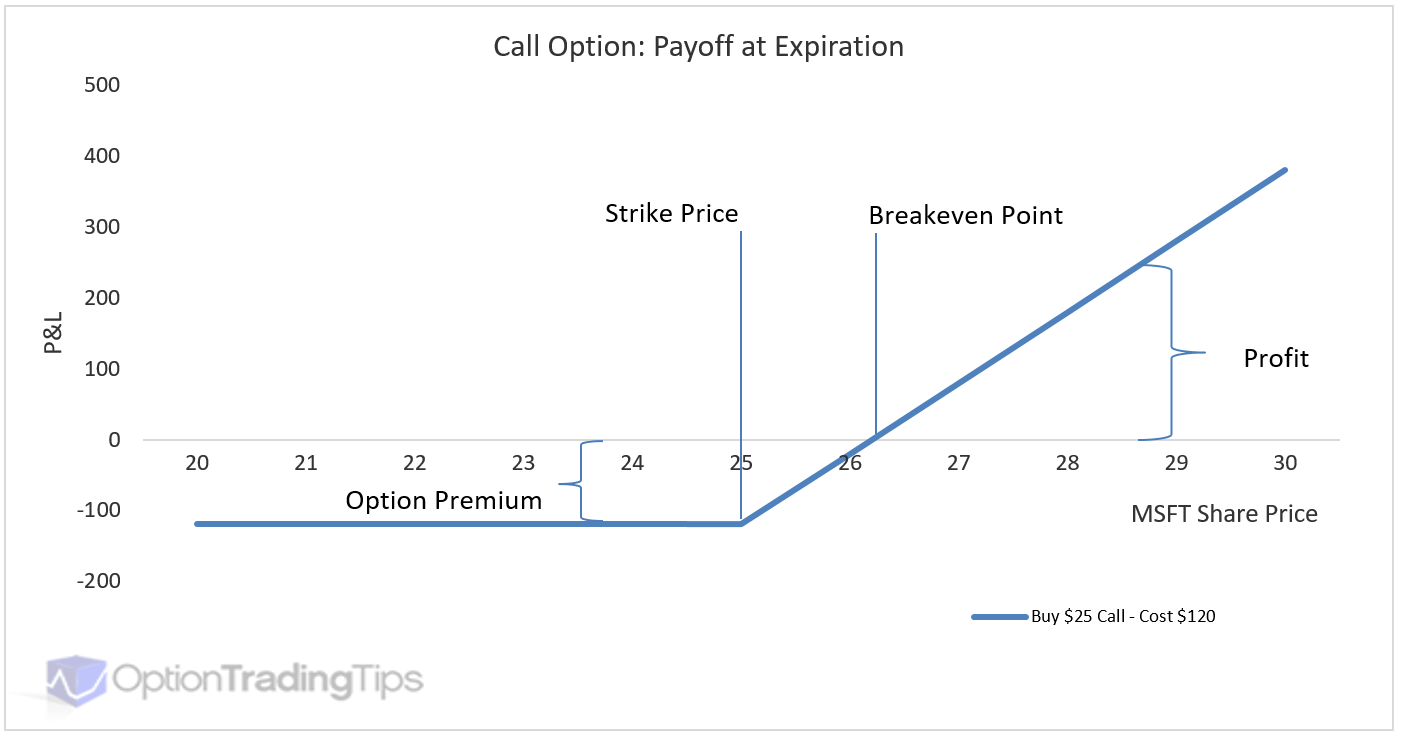
Unlike stocks, when you buy an option contract all you can lose is the upfront premium you paid for the position. It doesn't matter how far the market falls, your losses are guaranteed to be no more than your initial investment.
AND, if you're the buyer of an option you have limitless gains as the market moves in your direction, just like buying stocks.
Each Way Directional Strategies
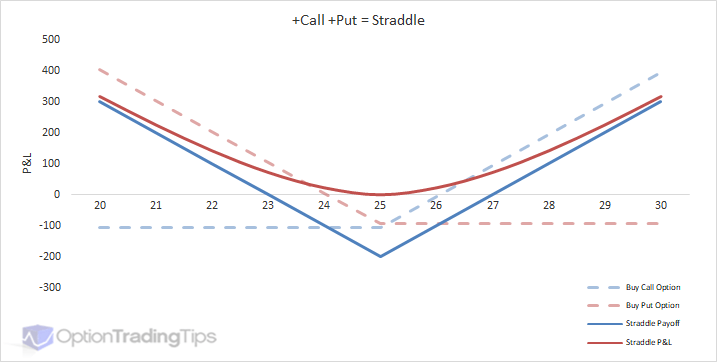
Not sure which way a stock is heading — just that it will make a large move up or down? Here is where you use options.
Combining a call and a put together means you profit from a movement in either direction.
Example strategies: Long Straddle and Long Strangle.
Profit When a Stock Goes Sideways
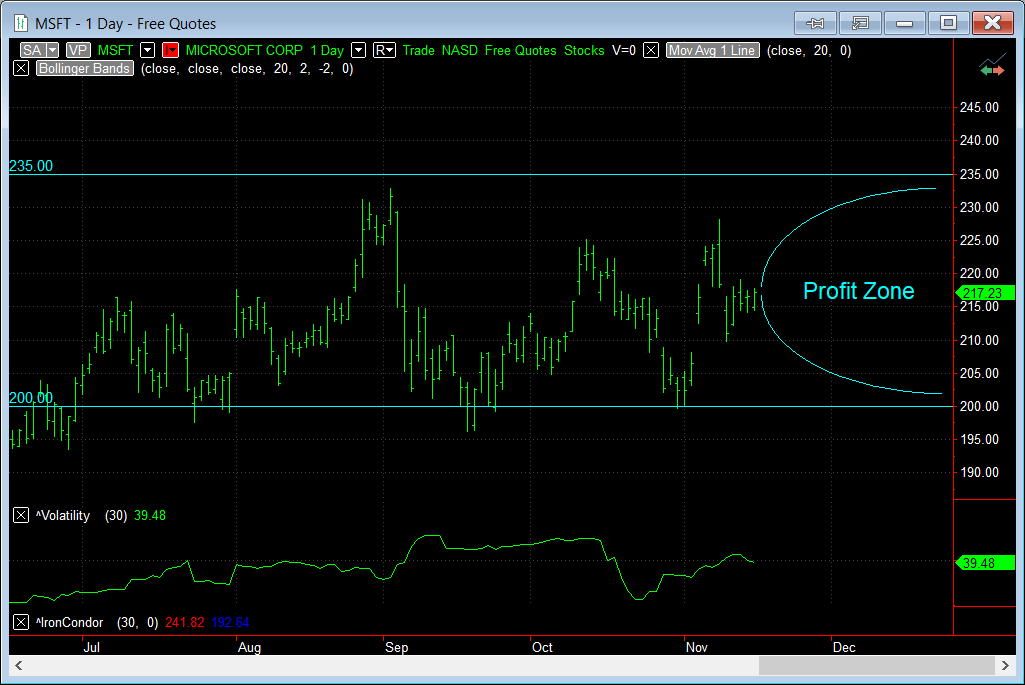
Imagine being able to make money if the stock does nothing!
This is a favourite strategy of those looking for regular monthly income — and the feature strategy used in the members area videos.
As long as the stock stays inside the strike levels, you're making money. Plus, you can set these up so that your losses are limited too.
Example strategies: Iron Condor and Double Calendar.
Get Paid for Limit Orders
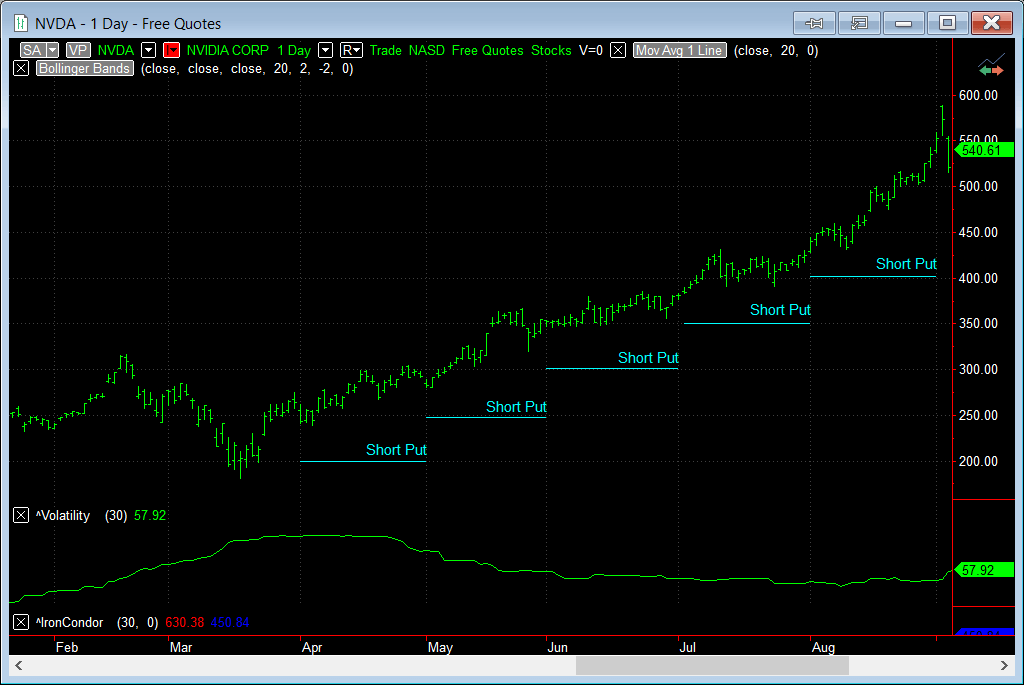
Stock price just a little high, yet you're still interested in buying? You can use options to get paid to place a limit order below the market.
A short put option does this. If the stock stays above your strike price your profit is the premium received. If it drops below, you buy the stock anyway.
You can keep repeating this over and over — keeping the premium each time and applying unused capital to other trades.
Watch and learn how to trade options profitably in our members area
Learn more →Popular Options 101 Articles
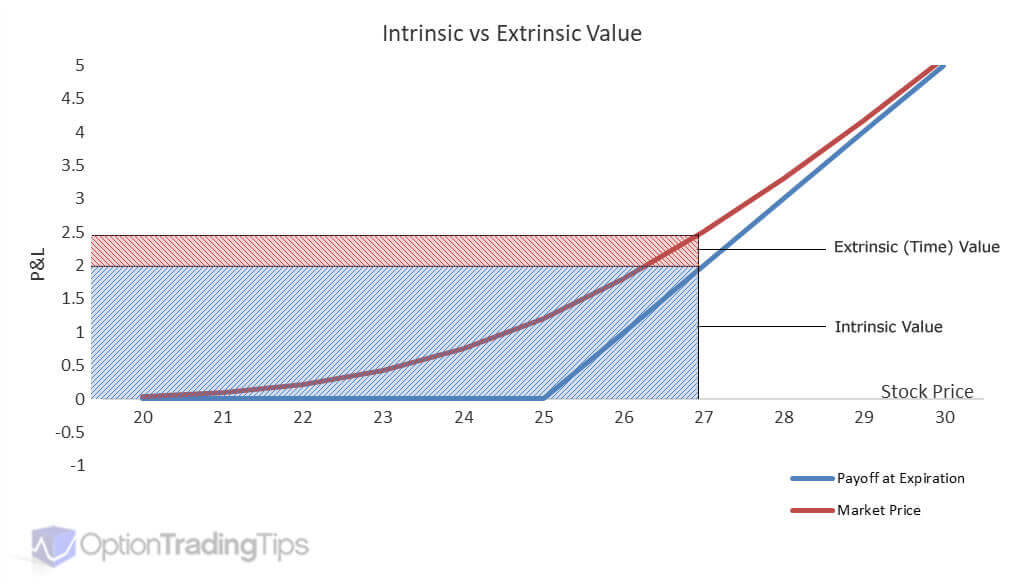
Option Premium
Understand the two components that make up an option price — intrinsic value and extrinsic value.
Read more →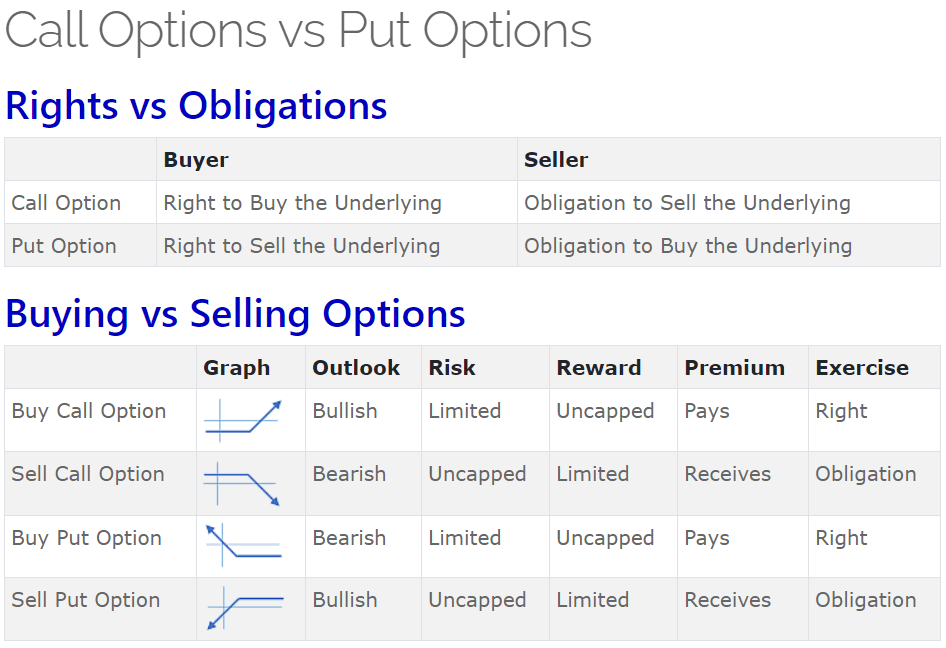
Calls vs Puts
Buy calls and profit when prices rise. Buy puts and profit when they fall. But what happens when you sell instead?
Read more →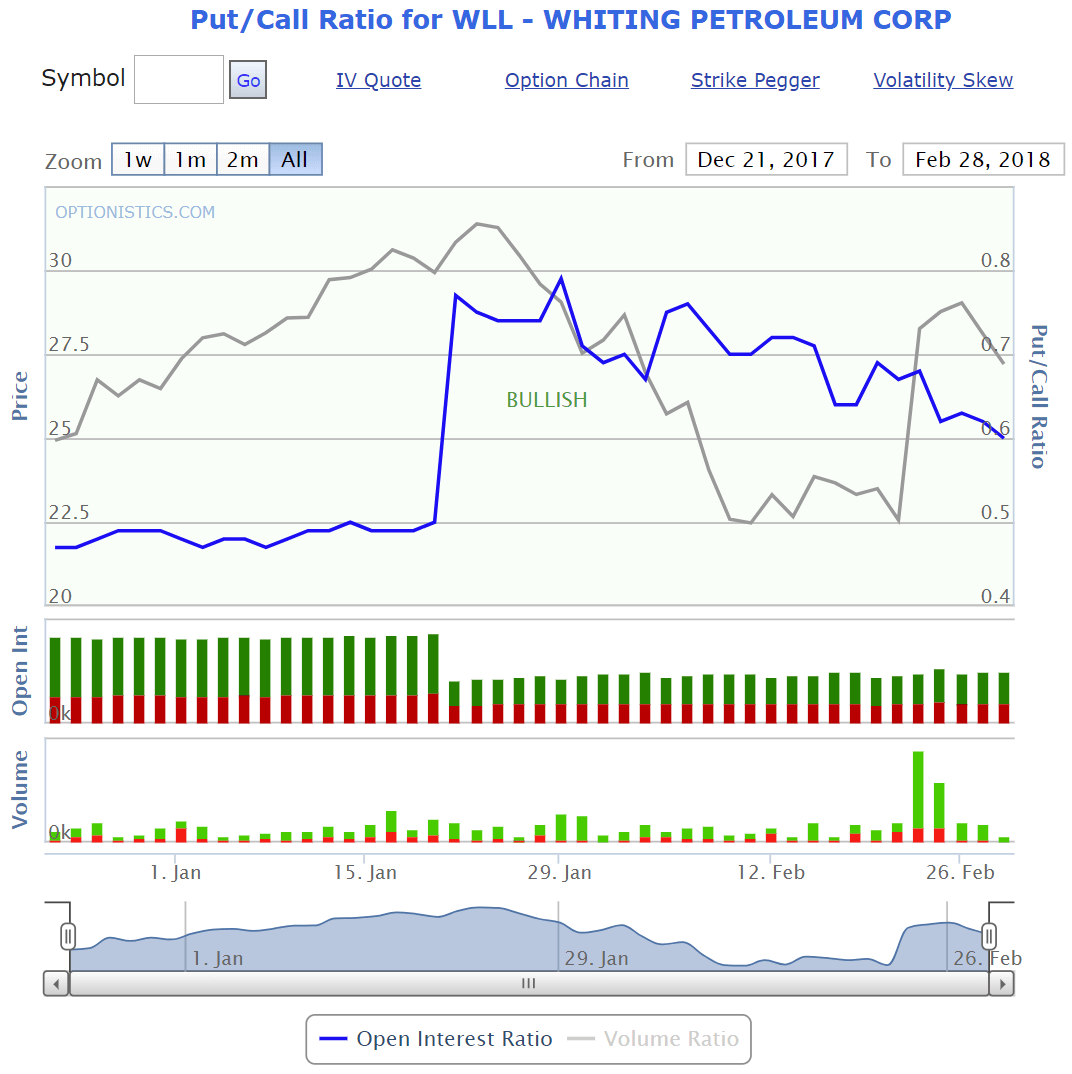
Put Call Ratio
Discover how option volumes can help you forecast the direction of the underlying stock.
Read more →
106 Comments
kanchan December 23rd, 2011 at 12:22am
do u have any excel pricing model for Indian options ?
Peter December 20th, 2011 at 5:09pm
Hi Danielyee,
When to enter the market all depends on your view of the stock.
danielyee December 19th, 2011 at 5:03am
Hi
I'm Daniel from Malaysia
I'm very new in option trading. Can some one please guide me where I can learn when time to enter the trading? Thanks.
Adil Siddiqui October 27th, 2011 at 3:07pm
Great information on options, what kind of strategies can be used in this volatile climate especially on instruments like Gold
Peter October 4th, 2011 at 12:21am
Yes, take a look at the article on the Binomial Model.
Bruce October 3rd, 2011 at 11:34pm
Do you have any excel pricing model for American options?
Peter September 11th, 2011 at 7:05pm
Possibly...options lose value as expiration approaches (time decay) and the amount lost increases the closer the option is to expiration.
Any potential gains due to movements in the underlying price need to be enough to outweigh the effects of time value and changes in implied volatility.
Having said that, however, if the price movement you mentioned occurred very quickly, say, over one day then you will most likely still make money on that option.
shail September 11th, 2011 at 7:04am
Hi Peter,
I'm just getting to know options and had few question if you can help me understand.
Say I have bought a call option contract with strike 5000 at a premium of 15 and qty 100 on 03rd Sept, 2011 whereas the current index level is 4500.
Now if the index moves till 4900 do I still make money? Considering that the index has not cross the strike level of 5000 (buy level)?
Peter August 11th, 2011 at 6:57pm
Buy to open = to establish a new long position
Buy to close = to exit/close out an existing short position
Sell to open = to establish a new short position
Sell to close = to exit/close out an existing long position
Exercise = if you are long an option and you want to exercise the option to take delivery of the underlying or sell the underlying (depending on whether it is a call or put option)
Yeah, I'm not sure why some brokers use that terminology in their platforms - it is confusing. I think a simple "buy" and "sell" is enough. I mean, if you own 100 shares in MSFT and you want to get rid of them I think it is clear enough that you would "sell" 100 MSFT.
Gabe August 11th, 2011 at 3:13pm
So when I sell the contract it doesn't mean i'm writing it i'm just selling a already written contract correct? Also when I go to buy a contract/option thru my broker (tdameritrade) I chose what leg of the symbol [what contract I want] aka GE, etc....but I have to chose one of the four options
---------------
Buy to open
Buy to close
Sell to open
Sell to close
Exercise
----------------
Can you explain what each one means? What one would I chose to just buy, say I wanted a *call option* which is what confuses me. Whats the difference between Buy to open and Buy to close and all the rest....
Thanks,
Add a Comment