Buying a Call Option
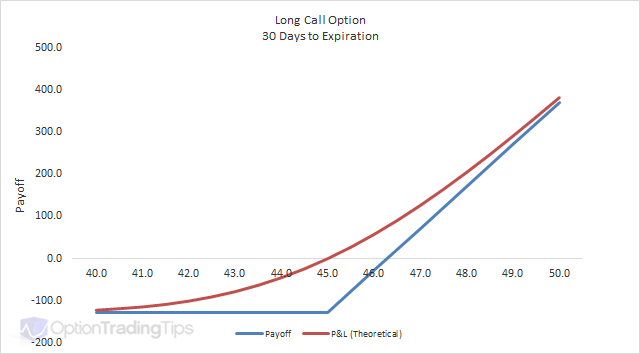
| B/S | Strike | Type | Price |
|---|---|---|---|
| Buy 1 | $45 | Call | $1.29 |
| Net Debit | $129 | ||
A long call option gives the buyer the right to buy the underlying asset at the strike price. The option buyer pays a premium for this right to the seller of the option.
The Max Loss will only ever be the premium that is paid up front to buy the option.
The Max Gain is uncapped and will rise with as long as the underlying price rises.
Characteristics
When to use: When you are bullish on market direction and also bullish on market volatility.
A long call option is the simplest way to benefit if you believe that the market will make an upward move and is the most common choice among first time investors.
Being long a call option means that you will benefit if the stock/future rallies, however, your risk is limited on the downside if the market makes a correction.
From the above graph you can see that if the stock/future is below the strike price at expiration, your only loss will be the premium paid for the option. Even if the stock goes into liquidation, you will never lose more than the option premium that you paid initially at the trade date.
Not only will your losses be limited on the downside, you will still benefit infinitely if the market stages a strong rally. A long call has unlimited profit potential on the upside.
Long Call Greeks
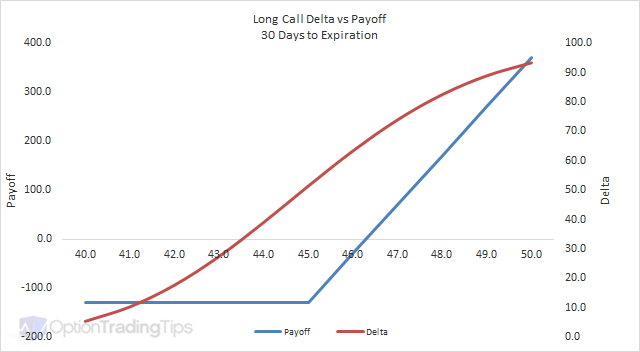
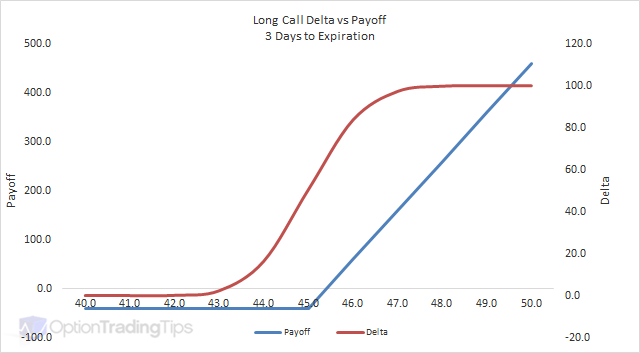
Delta
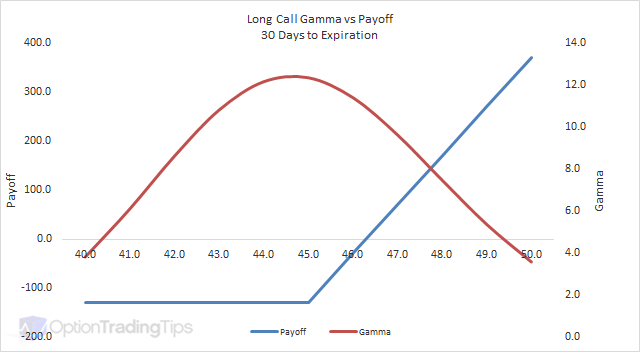
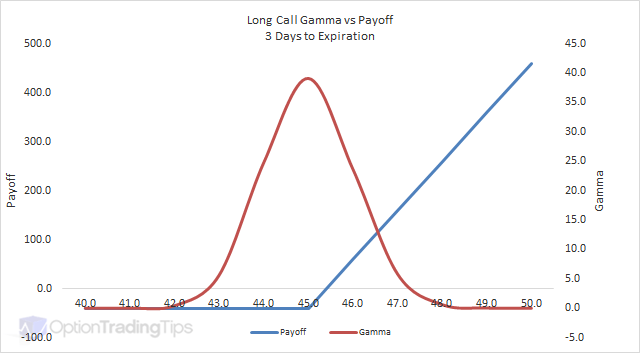
Gamma
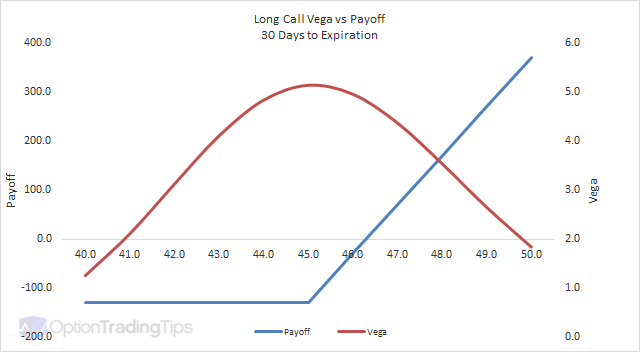
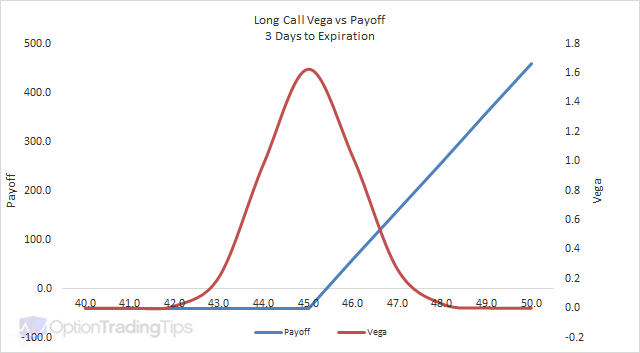
Vega
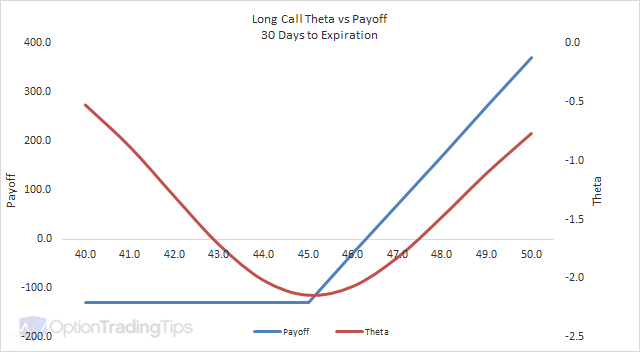
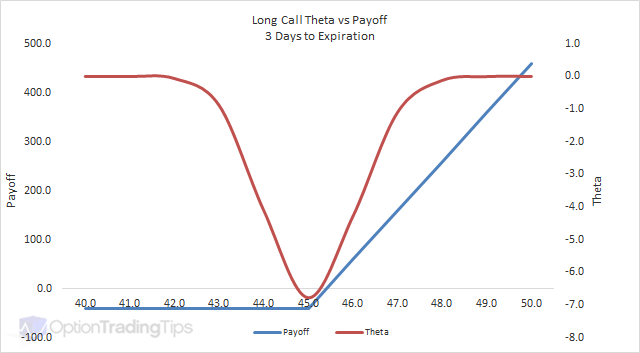
Theta
201 Comments
Neelam November 12th, 2010 at 10:32am
Hi, I have many people about the meaning of long call and long put, similarly short call and short put i am not clear about it, can you help?
Peter November 7th, 2010 at 5:05am
Hi Ben,
When you trade options via an exchange you aren't buying the option from the company that the option is based on...you are buying the option from another trader or market making firm.
When it comes to "why you would trade options", take a look at the reasons to trade options link. Let me know if anything is unclear.
Ben November 5th, 2010 at 8:43pm
Hi,
Thanks for this site, it is very helpful. I'm kind of embarrassed to ask this question, but I really just don't get the overall point of options. I understand the concept of buying a "contract" that lets you buy or sell, but I don't understand how this benefits anyone (a financial institution, company, etc.) to allow you to do this in the first place.
If the point of stocks is to buy them, and in doing so to invest your money so that the company can use that money, ideally to do a good job in business, become a more profitable company, which then creates a greater demand for their shares (and therefore the stock goes up in price), what is the point of an option? For example, if a stock is at $95 and I buy an option that allows me to buy 100 shares at $100, and then the price goes up to $103 then I can exercise the option, or I can "sell" the option (I also don't understand who would buy it) since it is now worth more since the price of the stock went up. But why wouldn't I just have bought the stock directly when it went up anyway and just completely avoided the option, in other words how has anyone (meaning any financial institution, company, etc.) benefited by even giving me this option contract in the first place?
Sorry for this basic question, but it seems like I am learning more and more about the details of how options work without even understanding the underlying point of why they exist, and that's frustrating to me. Thanks!
Peter October 28th, 2010 at 3:34am
Hi Kaushik, if there is a market in the option contract (i.e. a bid/ask) then you can sell it back whenever you like - it doesn't matter what price the stock is trading.
kaushik October 27th, 2010 at 10:43am
Boss im back
So this is my Q
current xyz price is 20 for $1
lets say i bought a xyz JAN 11-Call with strike price 25
in dec xyz is 23, so my calls are $2 each, up by 100%
Can I sell them even xyz they hits the strike because im already 100% up in profit.
OR does the underlying stock HAS to hit strike price in order to sell them...thanks again
Peter October 22nd, 2010 at 4:41pm
Ha, no probs, keep 'em coming ;-)
kaushik October 21st, 2010 at 5:52pm
peter u r the best....i spoke my brokerage, u guessed it damn right.....i have to use "sell to close" to close out....
more dumb Qs coming soon :P
Peter October 20th, 2010 at 7:33pm
Hi Kaushik, ha, no worries, that's what the site is for...it can be confusing.
The terms "buy to open", "buy to close" sound like they are part of your broker's application to place orders? I wouldn't say that these terms are "standard".
I use Interactive Brokers and they simply have "buy" and "sell". So, if you have bought 1 option contract and you go and "sell" 1 of the same option contract, this position will be "closed" automatically as +1 - 1 = 0.
If you are long an option contract and you wish to close it and take profits then you would just sell the same option contract. Perhaps the terminology in your broker's platform reads "sell to close" - doesn't really matter - you cannot be long and short the same contract at the same time.
Not sure of your last question...if you have bought a call option only then you won't be long any shares - unless you already own them?
kaushik October 20th, 2010 at 5:06pm
peter thanks for the reply, now air it bit clear.
now i have another Q
I see the different commands like buy to close, sell to close.
if i purchase call (buy to open) and i want to sell them, i dont want to buy back the shares, i want to sell and get the profit (cash in my account). Do i have to use the option "sell to close"
and if i want to buy the shares back, do i have to use the "buy to close"..sorry for all the super low basic qs....options are confusing for me man...
Peter October 19th, 2010 at 5:02pm
Hi Joey,
1) It depends on the Multiplier (or contract size). In the US option multipliers are 100, so in your example you would pay $980 + broker commission. However, in Australia for example equity options have multipliers of 1,000, which means you would pay 9,800 for the same option.
2) Yes, you can simply sell back the option and immediately realize the gain. If you exercised you would have to take delivery of the stock, which means outlaying the total purchase price (contracts x multiplier x strike price). Then sell back the shares to realize the gain.
In your example the option will be worth "at least" $14 so it would make more sense to sell back the option - unless you wanted to hold the stock for a longer term position.
Add a Comment