Short Put Option
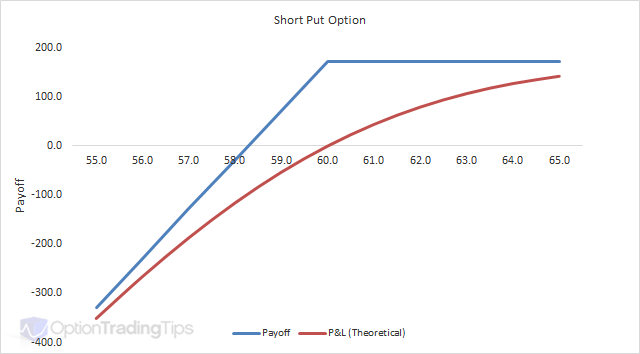
| B/S | Strike | Type | Price |
|---|---|---|---|
| Sell 1 | $60 | Put | $1.72 |
| Net Credit | ($172) | ||
A short put is the sale of a put option. It is also referred to as a naked put.
Shorting a put option means you sell the right to buy the stock. In other words you have the obligation to buy the stock at the strike price if the option is exercised by the put option buyer.
The Max Loss is unlimited in a falling market, although in practice is really limited to the total value of the exercised stock position — as a stock cannot trade below zero.
The Max Gain is limited to the premium received for selling the put option.
Characteristics
When to use: When you are bullish on market direction and bearish on market volatility.
Like the Short Call Option, selling naked puts can be a very risky strategy as your losses can be significant in a falling market.
Although selling puts carries the potential for large losses on the downside they are a great way to position yourself to buy stock when it becomes "cheap". Selling a put option is another way of saying "I would buy this stock for [strike] price if it were to trade there by [expiration] date."
A short put locks in the purchase price of a stock at the strike price. Plus you will keep any premium received as a result of the trade.
For example, say AAPL is trading at $98.25. You want to buy this stock but think it could come off a bit in the next couple of weeks. You say to yourself "if AAPL sells off to $90 in two weeks I will buy."
At the time of writing this the $90 November put option (Nov 21) is trading at $2.37. You sell the put option and receive $237 for the trade and have now locked in a purchase price of $90 if AAPL trades that low in the 10 or so days until expiration. Plus you get to keep the $237 no matter what.
The risk here is that the stock tanks before the expiration date leaving you with the potential to be exercised and take delivery of the stock at $90 when it, say, is trading at $80 when you are assigned the stock.
If the drop occurs early, and it is significant i.e. at or below the strike, you would want to re-evaluate your trade and potentially exit the option position before the losses increase. If the drop in stock value occurs close to the expiration date and is not yet through the strike price, a good exit plan is to put a short stop order on the stock itself. That way you'll be covered on the exercise if it happens while leaving the option position open to capture the remaining time value.
Option Strategy Swipe File
Ditch the text books. Instantly choose the right strategy for your needs with my one-page strategy template guide.
Short Put Greeks
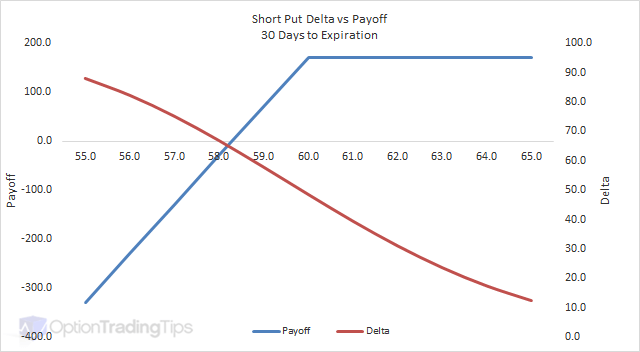
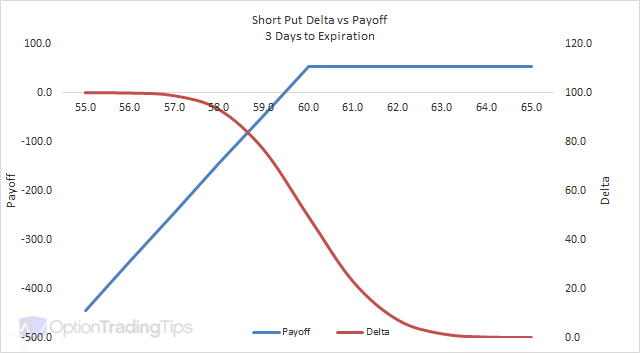
Delta
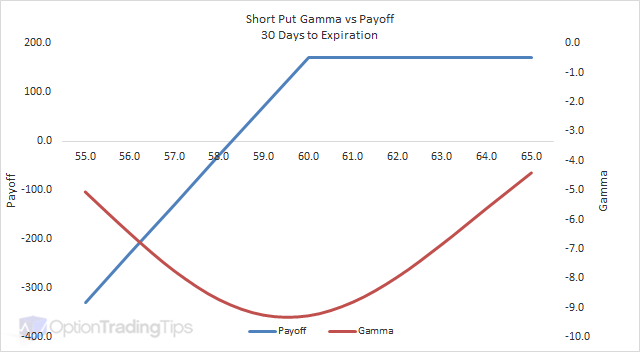
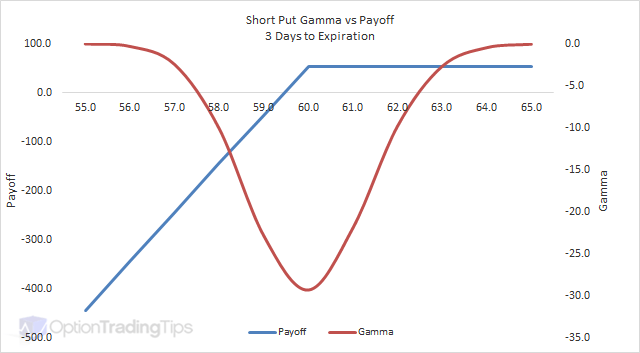
Gamma
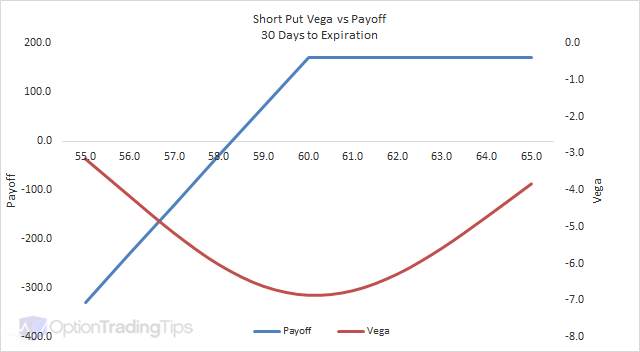
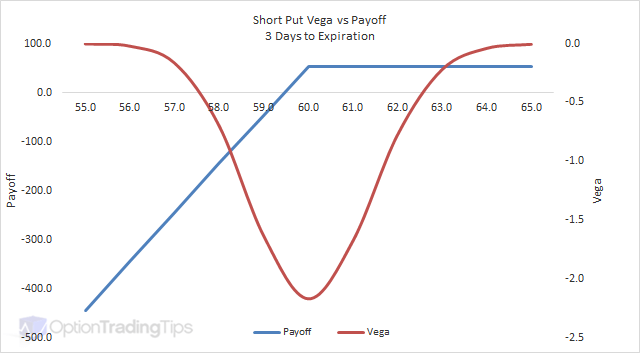
Vega
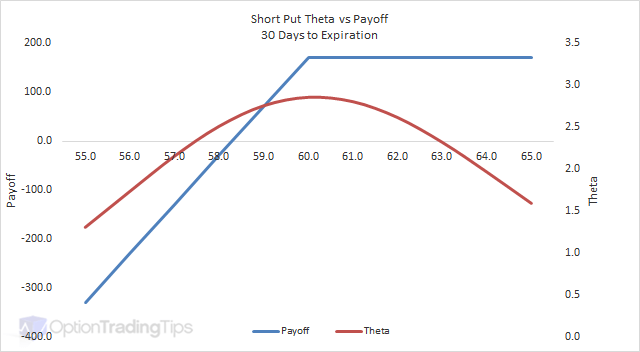
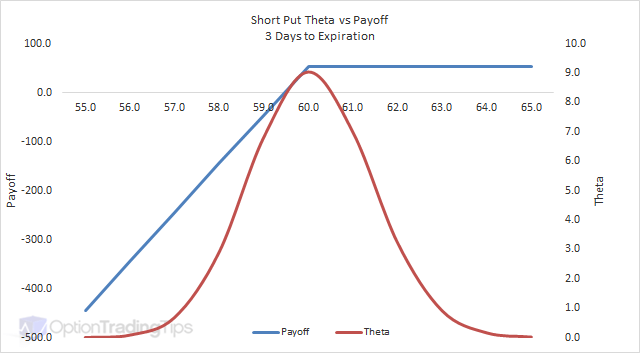
Theta
56 Comments
Peter August 9th, 2011 at 4:06am
ha ha, it's no problem!
1. If you need to calculate the premium of an option then you will need to first understand the mechanics of option pricing. Then you will need a calculator - you can download my option spreadsheet, which calculates an option's fair value.
However, you'll probably not need to calculate the option price yourself - the bids and offers in the market are what you'll be buying and selling against anyway.
2. Yes. If the order is still in the market waiting to be filled, the trader can just remove the order before it is filled if s/he changes his/her mind.
3. Yes. There is a screen shot on this page that shows what we call an option chain.
4. Yes. But it depends on the platform that you're trading with. I use Interactive Brokers and they have a "reverse position" button that if you click it opens up an order ticket to do the opposite of your existing position.
Nat August 9th, 2011 at 12:37am
Hello Peter,
I just hate myself for bothering you again, but you seem to be the perfect options teacher. I have 4 questions as follows?
1. How do you calculate the premium of the option?
2. If the seller of the option realizes that he doesn't want to sell his option although he has placed a sale order, but no one has bought it yet, can he cancel his sale?
3. When the buyer enters the trading platform (goes into the market to do his shopping), does he see a list of option contracts offered at different prices? Then he chooses to buy the one he wants that meet his specification, by placing an order?
4. When offsetting the position, do you simply place a sale or purchase order? There is no specific offset button, right?
Thank you so much and I hope that I don't have to bother you anymore after this.
Peter August 8th, 2011 at 7:59pm
Correct. Although technically, you don't actually "pay" a margin to the broker. The margin amount is "allocated" from your account by your broker in case you incur a large loss. The difference is that you should still earn interest on the margin.
Nat August 8th, 2011 at 7:28pm
Hello Peter,
I think I understand almost everything now, thanks to your explanation. One last question is, if the seller of the put option (or call option) offsets his position, when he does that does the margin that he has placed with the broker get returned to him after he closes his position?
Thank you.
Peter August 8th, 2011 at 1:48am
Kind of - although the buyers and sellers at the time of the transaction are not necessarily the ones to swap obligations for delivery.
If an option buyer decides to exercise, then the clearer will choose (at random I believe) a participant who has a short option position to exercise.
This process is called novation.
Nat August 8th, 2011 at 12:28am
Do you mean that the seller (let's call him seller a) buys it back from any seller (in this case, let's call him seller b) in the market? Then, seller b (the person he bought the option from) will be obliged to buy from the original buyer whom he sold his put option to in the first place instead of him? Is that how seller a closes out his position and exits any obligations that he has on him?
Thank you and sorry for taking so much of your time. You have been most helpful to me.
Peter August 7th, 2011 at 7:55pm
A short position is offset in the same way that a long position is - by doing the opposite trade. In this case by buying the same option contract back from a seller in the market.
Nat August 7th, 2011 at 7:35pm
Hello Peter,
Now I am confused about how the seller of a put closes out his position. He will buy the same contract with the same strike price and expiry date to offset the one he sold. Now, who does he buy it from and how does this close out his position as the seller of the put contract and leaves him with no obligation?
Thank you once gain for your help.
Peter July 14th, 2011 at 10:56pm
Hi Larry, the term "naked" is used to describe an option position where you don't have any downside/upside protection. In the case of a short put it is referred to as "naked" because your risk as the market sells off continues all the way until the market reaches zero.
Larry July 14th, 2011 at 9:40pm
I don't understand what you mean by naked when you state "selling naked puts..." in your description above. I understood that by selling a put option I might have the stock "put" to me at the strike price of the option, but I don't see what I'm "naked" of.
Add a Comment