Short Put Option
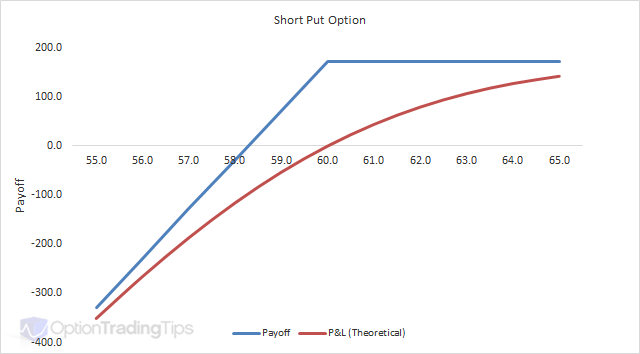
| B/S | Strike | Type | Price |
|---|---|---|---|
| Sell 1 | $60 | Put | $1.72 |
| Net Credit | ($172) | ||
A short put is the sale of a put option. It is also referred to as a naked put.
Shorting a put option means you sell the right to buy the stock. In other words you have the obligation to buy the stock at the strike price if the option is exercised by the put option buyer.
The Max Loss is unlimited in a falling market, although in practice is really limited to the total value of the exercised stock position — as a stock cannot trade below zero.
The Max Gain is limited to the premium received for selling the put option.
Characteristics
When to use: When you are bullish on market direction and bearish on market volatility.
Like the Short Call Option, selling naked puts can be a very risky strategy as your losses can be significant in a falling market.
Although selling puts carries the potential for large losses on the downside they are a great way to position yourself to buy stock when it becomes "cheap". Selling a put option is another way of saying "I would buy this stock for [strike] price if it were to trade there by [expiration] date."
A short put locks in the purchase price of a stock at the strike price. Plus you will keep any premium received as a result of the trade.
For example, say AAPL is trading at $98.25. You want to buy this stock but think it could come off a bit in the next couple of weeks. You say to yourself "if AAPL sells off to $90 in two weeks I will buy."
At the time of writing this the $90 November put option (Nov 21) is trading at $2.37. You sell the put option and receive $237 for the trade and have now locked in a purchase price of $90 if AAPL trades that low in the 10 or so days until expiration. Plus you get to keep the $237 no matter what.
The risk here is that the stock tanks before the expiration date leaving you with the potential to be exercised and take delivery of the stock at $90 when it, say, is trading at $80 when you are assigned the stock.
If the drop occurs early, and it is significant i.e. at or below the strike, you would want to re-evaluate your trade and potentially exit the option position before the losses increase. If the drop in stock value occurs close to the expiration date and is not yet through the strike price, a good exit plan is to put a short stop order on the stock itself. That way you'll be covered on the exercise if it happens while leaving the option position open to capture the remaining time value.
Option Strategy Swipe File
Ditch the text books. Instantly choose the right strategy for your needs with my one-page strategy template guide.
Short Put Greeks
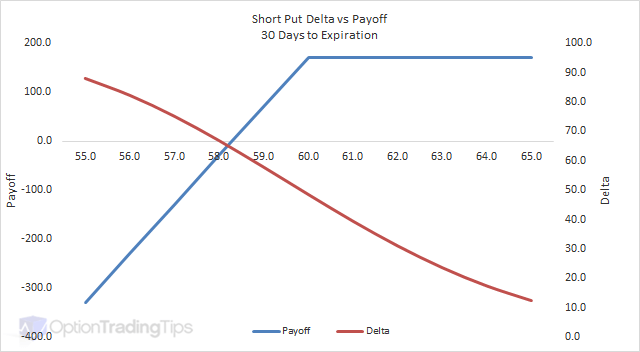
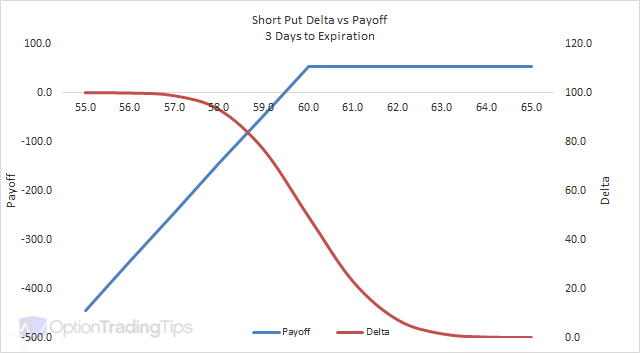
Delta
Gamma
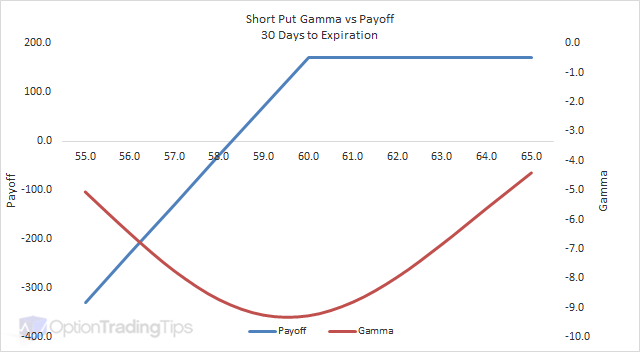
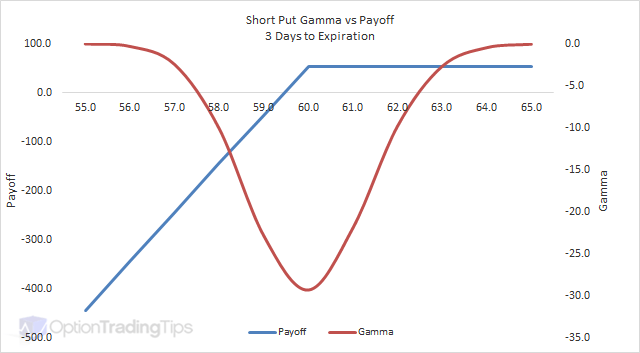
Vega
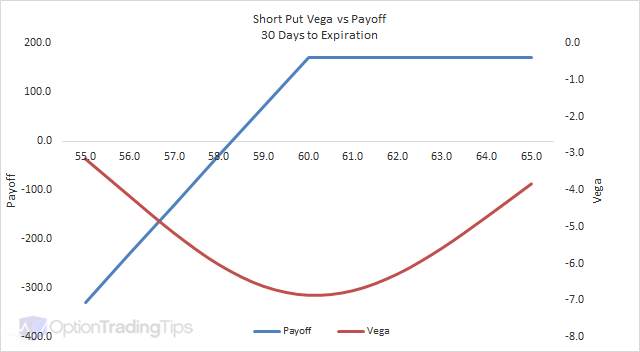
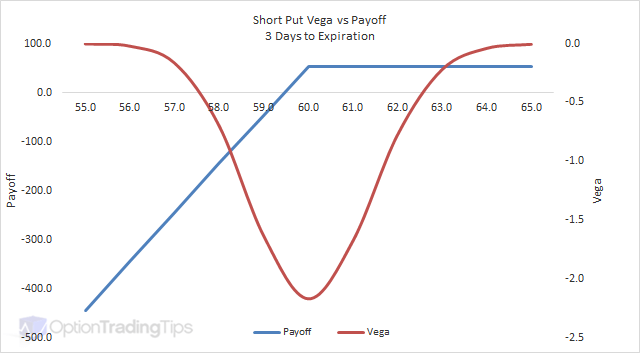
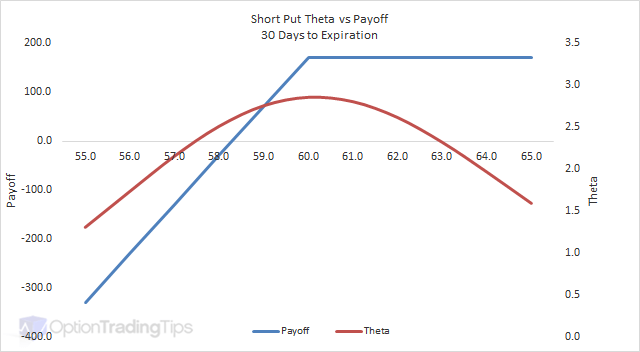
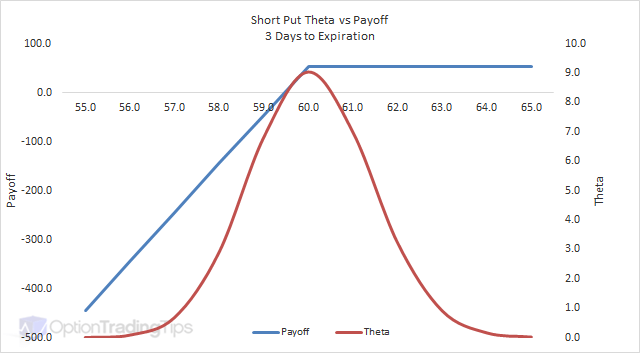
Theta
56 Comments
Admin December 8th, 2008 at 3:15am
Hi Marlowe,
Not sure what you mean. Are you saying that your broker won't allow you to sell a put option?
Marlowe November 27th, 2008 at 10:29am
I would like to carry out the AAPL trade for real, however I am told I can not carry naked put. But, I can buy a call which will cover me. What are the suggestions for this? Happy to own the stock.
Admin November 7th, 2008 at 7:10pm
I think the max loss on a short put is [(stock - strike) + premium] and seeing as the stock price is unknown and can therefore be anything it is reasonable to say unlimited.
john October 31st, 2008 at 9:03am
yes i agree the max loss is [(Strike-Premium) - 0]. There can be large losses if the strike is large, but there is certainly limited downside.
Admin September 23rd, 2008 at 10:27pm
A short put means that you are obligated to buy the underlying at the strike price if the buyer decides to exercise. So the payoff is the stock price minus the strike price less the premium received.
Once the underlying stock trades below the strike price price the option becomes out of the money. The option will continue to lose money as the stock continues a downward price movement.
I guess it is not really unlimited as a stock price cannot go below 0.
chris September 23rd, 2008 at 2:01pm
Isn't the maximum loss for a short put the Strike price, not unlimited? This is not including the premium made on the sell of the put. So the net loss would be the Strike price minus premium
Add a Comment